Focused product scope
Plastic belts, chains and the interfaces around them
Korea Ever-Power Plastic Conveyor Belt Co., Ltd. focuses on plastic modular belts, TableTop and side-flexing chains, sprockets, transfer components and supporting conveyor parts for industrial and OEM applications.
Our commercial workflow starts from the measurable conveyor interface: running geometry, product contact, pitch, width, drive, guides, return support, transfers and operating environment. This approach is useful for both new machine designs and replacement projects where an existing series may be worn or difficult to identify.

How an enquiry moves through engineering review
The objective is to turn application information into a clear product and interface definition before quotation.
Clarify product, load, speed, process, straight or curved motion, accumulation and transfer requirements.
Record pitch, width, hinge or rod details, sprockets, bore/shaft data and surrounding guide/support geometry.
Match the required motion and surface function to available belt, chain, sprocket and component families.
Use drawings, samples or additional measurements for any critical dimension, material or compatibility item not yet confirmed.
Manufacturing and inspection context
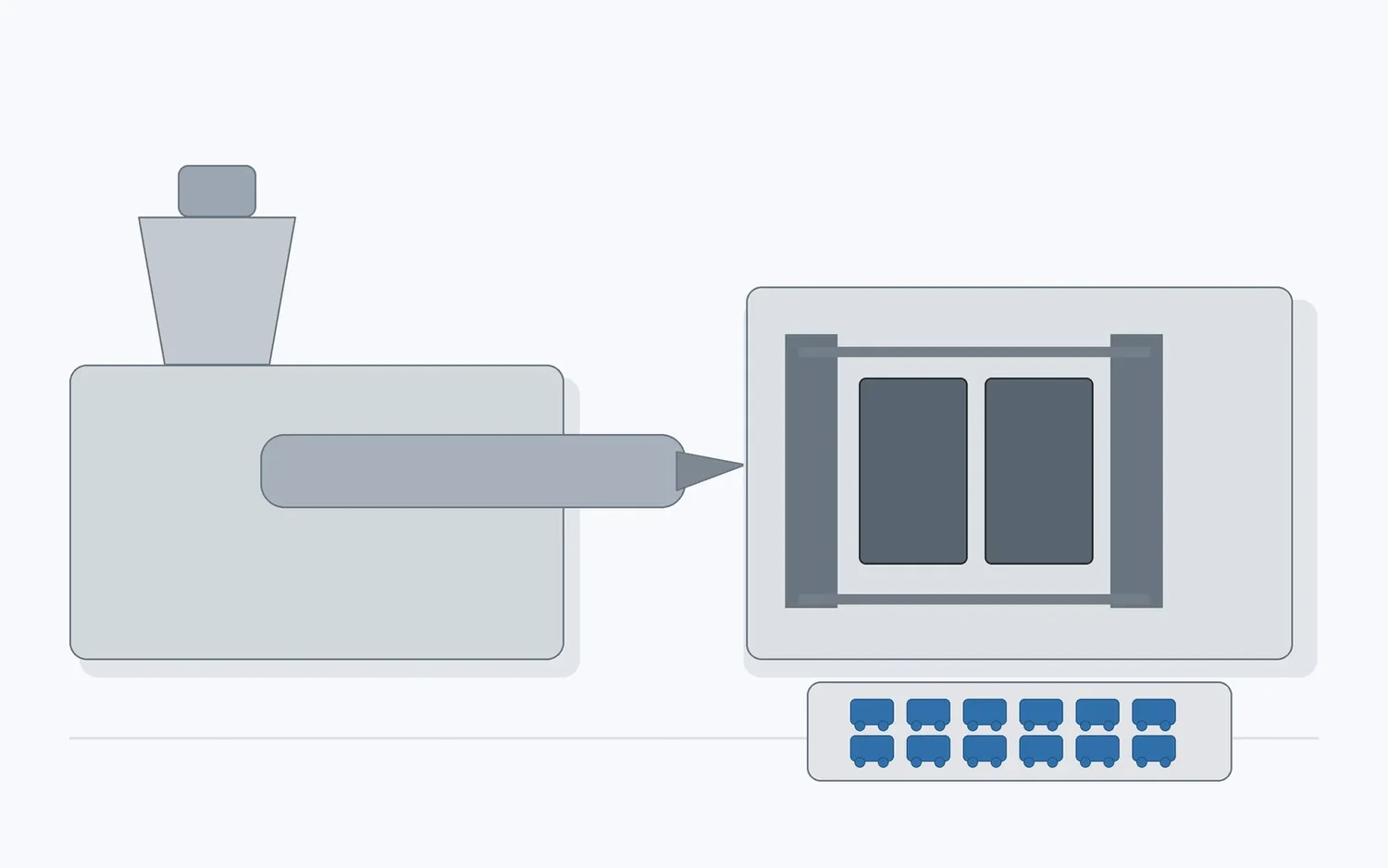
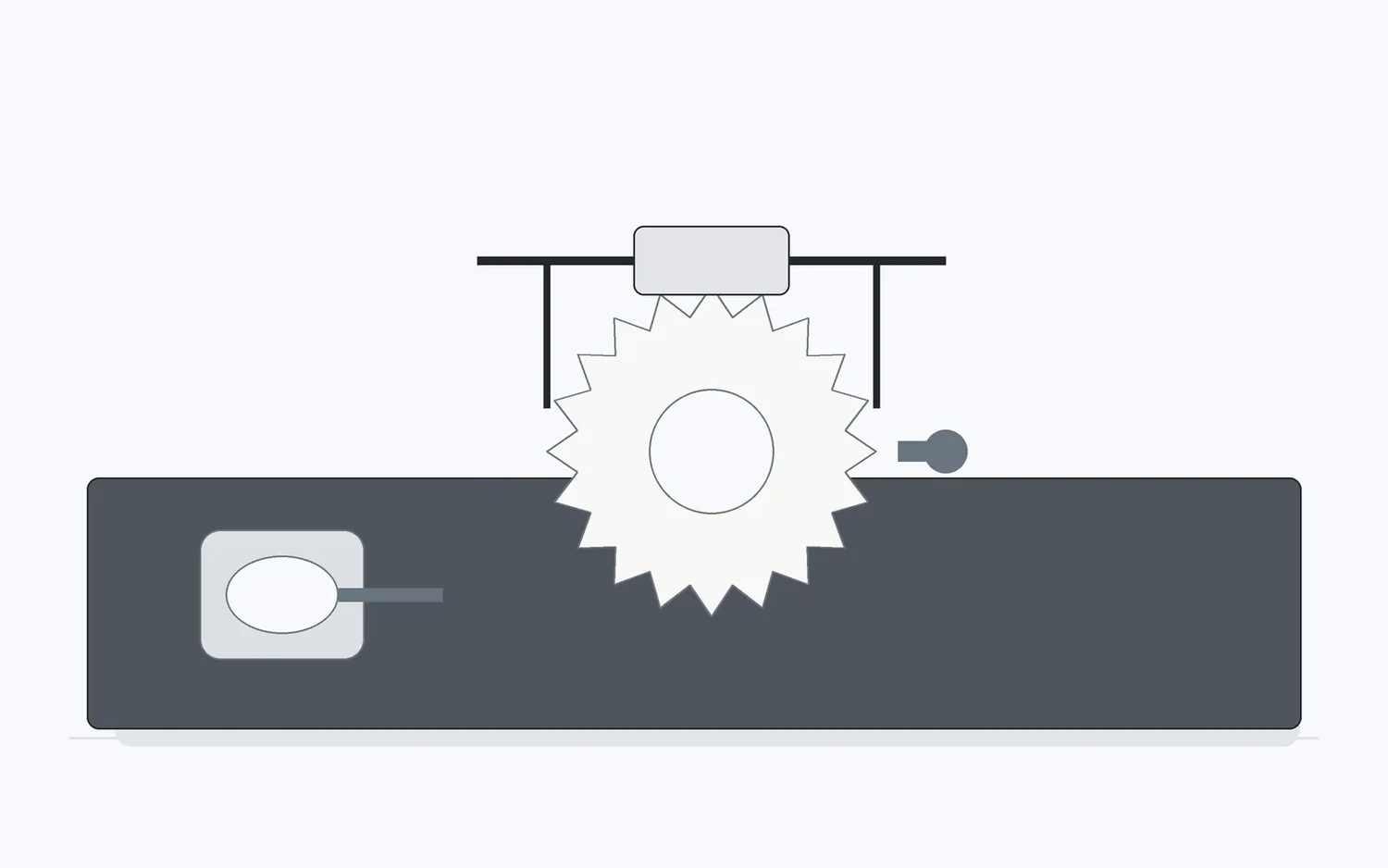
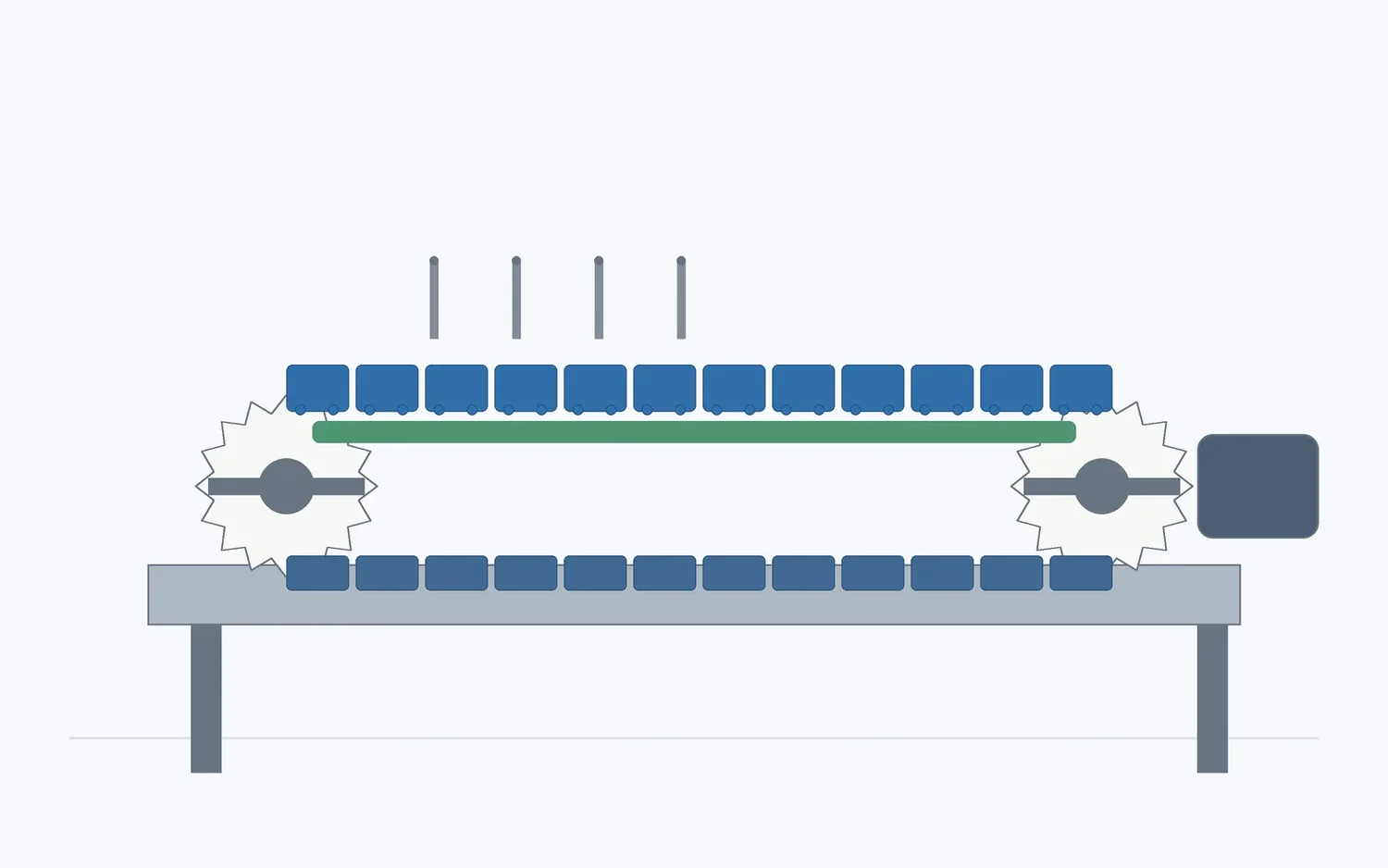
The process images on this site illustrate common stages relevant to molded plastic conveyor components: material preparation, molding, component finishing, dimensional inspection and assembly checks. Project-specific inspection requirements should be supplied with the enquiry when they affect acceptance.
Replacement matching support
Replacement work is strongest when the old part is treated as one part of a system. In addition to the belt or chain, inspect drive sprockets, guide contact, wear strips, return support and transfer components. A replacement that looks correct can still be incompatible if pitch, underside drive geometry or articulation differs.
When no readable model is available, send perpendicular photographs and direct measurements rather than relying on color or visual similarity. The measurement guide shows the minimum information that helps narrow the series.
Industries and process environments
Wet or dry conveying, drainage, stable product support and frequent cleaning.
Guided containers, curves, accumulation and transfer stability.
Cartons, trays and pouches with straight runs, accumulation, transfers and changes of direction.
Low-temperature and moisture conditions where material and return-path behavior need explicit review.
Discuss a new or replacement conveyor
Send the series/model when known, dimensions, conveyor layout, operating conditions, quantity and photographs or drawings.