Answer first
- Confirm the measurable interface before choosing a replacement.
- Keep series-specific published series limits with the exact material and geometry.
- Record any unknown value as an RFQ confirmation item rather than estimating it.
The safest approach to plastic modular belt selection is to treat belt, chain, sprockets, support, guides, transfers and environment as one system. Start with measured geometry and duty conditions, eliminate incompatible configurations, and only then finalize material and accessories.
1. Define product and process
Record product dimensions, weight, base shape, temperature, stability and whether accumulation is expected. Add the process requirement: washing, draining, cooling, heating, inspection, buffering, merging or transport.
Жұмыс ортасы маңызды, себебі термопластикалық материалдар температураға, ылғалға, химиялық заттарға, абразияға және үздіксіз сырғанау жанасуына әртүрлі жауап береді. Жарияланған сериялық мәндер олардың көрсетілген материал кодтарымен және температура диапазондарымен бірге пайдаланылуы керек. Материалды тек ұқсас түсі болғандықтан ғана алмастыруға болмайды; түс материалды анықтаудың жеткілікті әдісі емес.
2. Define conveyor geometry
Түзу және радиус жүйелері әртүрлі геометриялық талаптар қояды. Түзу жүрісті модульдер қозғалыс бағытында жұлдызшалардың айналасында айналады, ал радиус немесе бүйірлік иілгіш конструкция бақыланатын қисық арқылы бүйірлік артикуляцияны да қамтамасыз етуі керек. Түзу белдікті ешқашан ені рамамен сәйкес келетіндіктен қисық арқылы мәжбүрлеп өткізуге болмайды.
Measure straight lengths, incline angle, curve angle, inner radius, conveyor width, shaft centerline, transfer heights and return path.
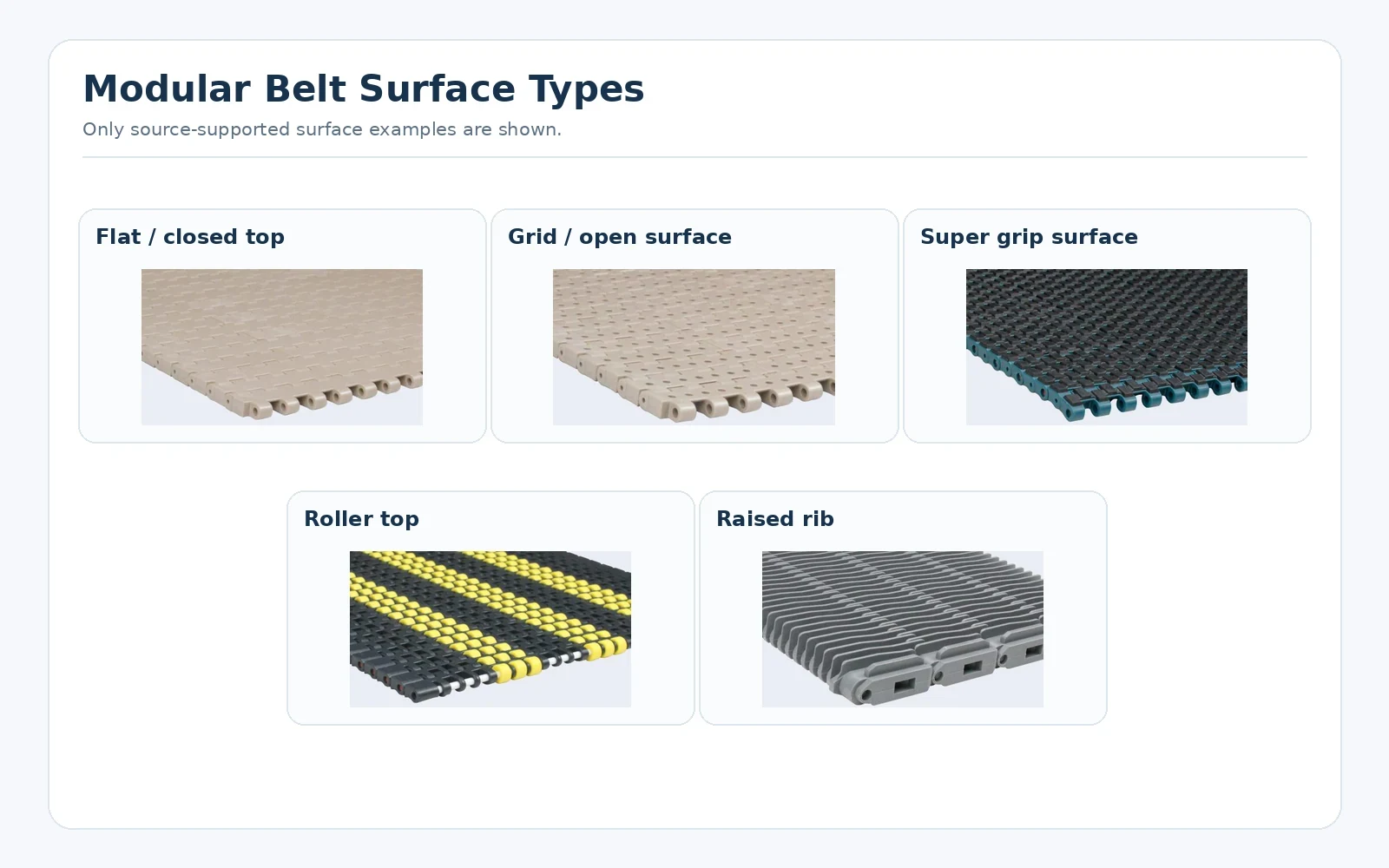
3. Measure existing belt or chain
Ауыстыру жұмыстары үшін ең пайдалы бастапқы ақпарат - бар белдік немесе шынжыр идентификациясы, қадам, жиналған ені, топса немесе шыбық орналасуы, жиек профилі, жұлдызша тістерінің саны, жұлдызша тесігі, біліктің өлшемі және жетек пен қайтару ұштарының анық фотосуреттері. Бұрынғы таңбалау оқылмаған кезде, өлшемді эскиз және бірнеше перпендикуляр фотосуреттер бір перспективалық кескінге қарағанда сенімдірек.
4. Match the positive drive
Тісжегілер оң жетек қатынасын қамтамасыз етеді. Тіс саны, қадам диаметрі, тесік, күпшек немесе жартылай бөлінген конструкция, біліктің кілті және осьтік орналасуы бірге қарастырылуы керек. Дұрыс емес туралау жүктемені белдік енінің тек бір бөлігіне ғана шоғырландыруы мүмкін, ал дұрыс емес бекіту орналасуы жылу қозғалысына кедергі келтіруі мүмкін.
5. Review support, guides and transfers
Тасымалдаулар ұзын конвейер аралықтары сияқты инженерлік назар аударуға лайық. Кішкентай немесе тұрақсыз өнімдерге тарақ тақтасы, ролик көпірі, тұмсық орналасуы немесе басқарылатын өлі тақта геометриясы қажет болуы мүмкін. Мақсат тек көрінетін кішкентай саңылау емес; интерфейс өнімді ұстап тұруы және қозғалатын модульдер мен қозғалмайтын бөлшектер арасындағы кедергілерді болдырмауы керек.
| Interface | Engineering check |
|---|---|
| Carry-way support | Support surface must suit module geometry and load. |
| Return path | Prevent uncontrolled sag or interference. |
| Guides | Control product without forcing belt/chain outside its intended path. |
| Transfer | Check comb, roller bridge or dead-plate clearance. |
| Көлік жүргізу | Confirm clean tooth engagement and alignment. |
6. Commission and maintain
Техникалық қызмет көрсету тексеру арқылы жүргізілген кезде ең тиімді болады. Операторлар топса аймақтарын, шыбықтарды, бағыттаушының жанасуын, жұлдызшаның қосылуын, ерекше шуды, жергілікті тозуды, өнімнің жиналуын және қайтару жолындағы кез келген өзгерісті бақылауы керек. Бір тозған компонентті туралауды немесе ластануды түзетпей ауыстыру мәселені тек басқа жерге ауыстыруы мүмкін.
Record the final installed series, sprocket data, shaft arrangement, key dimensions and any special material or cleaning requirement.
RFQ checklist
OEM және жаңғырту жобалары үшін жақсы RFQ расталған деректерді ашық сұрақтардан бөледі. Расталған өлшемдер бірліктермен және өлшеу әдісімен көрсетілуі керек. Белгісіз материал, жүктеме, жылдамдық немесе химиялық әсер бағалау үшін емес, растау үшін белгіленуі керек.
Жиі қойылатын сұрақтар
Which dimension should I measure first?
Start with pitch and assembled width, then document the hinge/rod line, belt edge and sprocket/shaft interface.
Can a drawing be scaled from a photograph?
Not reliably unless a scale exists in the same plane. Use direct measurement whenever possible.
What if the part has no readable marking?
Send multiple photos, pitch, width, underside drive geometry, sprocket tooth count and bore, and a sample if possible.
Should material be changed when the old belt wears quickly?
Identify the wear mechanism first. Alignment, support, contamination and temperature may be more important than material.
How do I compare two candidates?
Compare geometry, surface function, load, temperature, width construction, radius/backflex limits and sprocket/component requirements.
Decision record before release
| Decision point | What to verify |
|---|---|
| Geometry | Write down pitch, width, hinge/rod or edge details and the specific running geometry. Separate measured values from nominal assumptions. |
| Көлік жүргізу | Identify sprocket family, tooth count, bore, shaft size and how sprockets are fixed or allowed to float axially. |
| Process | Record product load, speed, temperature, cleaning, moisture, accumulation and transfer conditions that can change surface or material choice. |
| Ашық нүктелер | List every unknown explicitly and close it through measurement, drawing review, sample comparison or supplier confirmation before ordering. |
A useful engineering record is short enough to be maintained but complete enough that another engineer can repeat the decision. It should state what was measured, what was selected, which interfaces were checked and which conditions still need confirmation.
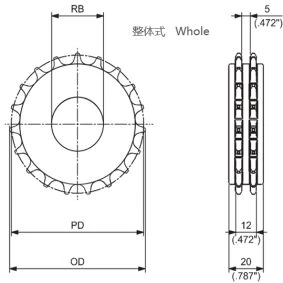
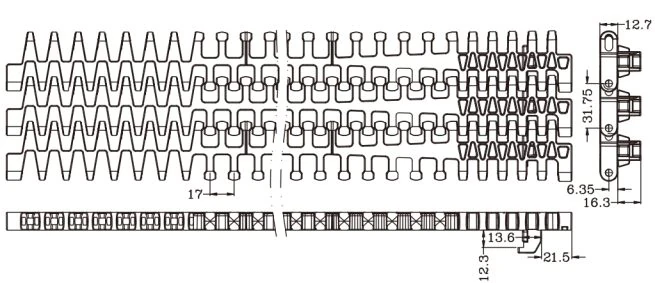
Worked decision sequence for modular belt selection
Use the sequence below as a review order. It keeps machine geometry ahead of appearance and keeps operating conditions attached to the component choice.
Record product footprint and identify which surrounding dimensions are fixed by the existing machine or proposed layout.
Measure or define running geometry and surface and pitch with units, drawings or clear photographs.
Check sprocket match together with product behavior, speed, temperature, moisture, cleaning and accumulation where relevant.
Confirm environment, mating components and all open RFQ points before the final order description is frozen.
How to compare two candidate configurations
| Тексеру | Практикалық шолу |
|---|---|
| Geometry | Reject a candidate that does not match the required articulation, pitch, width, bore, guide or mounting interface even if other features appear attractive. |
| Operating envelope | Compare temperature, wet/dry duty, load, cleaning and process conditions only for the exact material/configuration being considered. |
| Mating components | Include sprockets, shafts, guides, wear strips, return parts and transfers in the comparison. A lower-cost moving component may require changes elsewhere. |
| Maintenance | Compare access to hinges/rods, drive and return components, cleaning zones and the practical method of replacing wear parts. |
| Documentation | Prefer the option that can be released with a clear series, dimensions, material/configuration and mating-interface record. |
What an inspection can tell you
Existing wear can reveal whether the previous configuration was loaded evenly. Edge polishing, local sprocket wear, repeated guide marks, rod movement, debris concentration or a change in transfer damage can identify where to measure next. Treat these observations as diagnostic clues rather than as proof that the belt material itself is wrong.
When several symptoms occur together, start with alignment and interface geometry. Correcting the root cause before installing a replacement helps avoid transferring the same problem to a new component.
Record before disassembly
- Drive and return-end photographs
- Guide and wear-strip contact areas
- Transfer geometry and product orientation
- Any localized wear or discoloration
- Measurements with units and measurement point
Send the engineering data
Provide the measured interfaces, application conditions and current component details. Unknown values can remain explicit until they are confirmed.