Series / Product
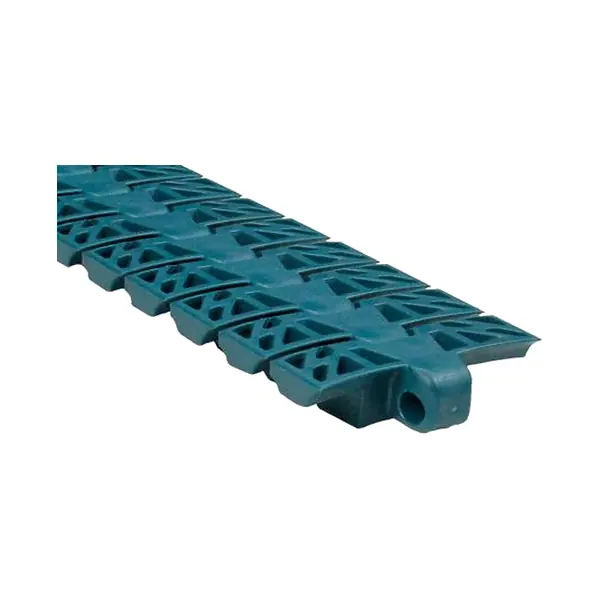
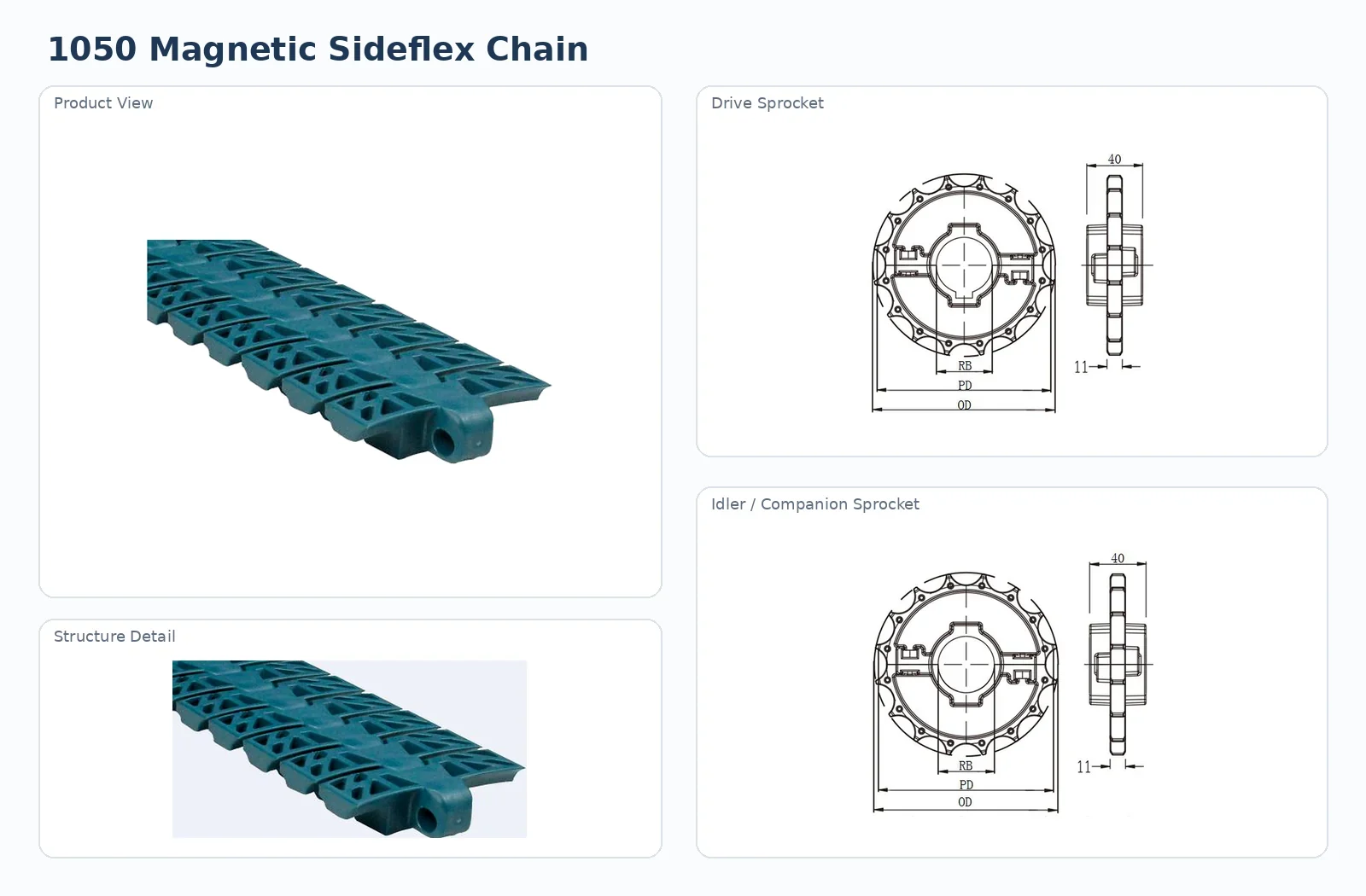
1050 Magnetic Sideflex Single Hinge Chain
Endüstriyel taşıma ve değiştirme işleri için 1050 Manyetik Yan Esnek Tek Menteşeli Zincir, seriye özgü boyutlar, arayüz kontrolleri ve fiyat teklifi kılavuzu ile birlikte sunulmaktadır.
- Pitch
- 25.4 mm
- Minimum backflex radius
- 130 mm
- Minimum sideflex radius
- 500 mm
- Maximum working load at 21°C
- 1650 N
For replacement work, send the existing series/model when known plus measured width, pitch and drive-interface details. Unknown values can remain open for confirmation.
Product overview
1050 Magnetic Sideflex Single Hinge Chain is presented as an industrial conveyor component for OEM, replacement and line-development work. This page keeps the series identity and available technical data together, then explains the surrounding interfaces that determine whether a replacement or new installation will fit and run correctly.
A plastic modular conveyor is a positive-drive system. The belt or chain should be selected as part of a complete mechanical interface that includes the conveyed product, support surface, shaft arrangement, sprocket position, return path, guides, transfers, temperature, cleaning regime, and accumulation behavior. A small geometric mismatch can alter articulation or tooth engagement, so purchasing decisions should be based on measured interfaces rather than visual similarity alone. For replacement work, the most useful starting information is the existing belt or chain identification, pitch, assembled width, hinge or rod arrangement, edge profile, sprocket tooth count, sprocket bore, shaft size, and clear photographs of the drive and return ends. When a legacy marking is unreadable, a dimensioned sketch and several perpendicular photographs are more reliable than one perspective image.
Structure and interface
Düz ve yarıçaplı sistemler farklı geometrik gereksinimler ortaya koyar. Düz modüller, hareket yönünde dişliler etrafında eklemlenirken, yarıçaplı veya yanal esneme özelliğine sahip bir tasarım, kontrollü bir eğri boyunca yanal eklemlenmeyi de sağlamalıdır. Düz bir kayış, genişliği çerçeveye uyduğu için asla bir eğriden geçmeye zorlanmamalıdır.
Check the hinge line, edge geometry, underside drive features and any retention elements against the existing system. Do not identify the product from color alone.
Technical specifications
Use the series-specific values below when checking fit, operating conditions and drive compatibility. Confirm project conditions before release.
| Parameter | Value |
|---|---|
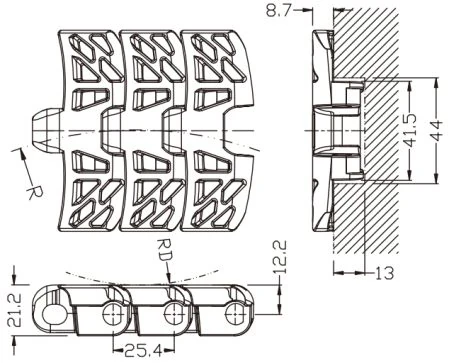
| Pitch | 25.4 mm |
| Minimum backflex radius | 130 mm |
| Minimum sideflex radius | 500 mm |
| Maximum working load at 21°C | 1650 N |
| Working temperature, dry | 4–64 °C |
| Working temperature, wet | 4–64 °C |
| Weight | 1.5 kg/m |
| Material options | XLG / PS |
Selection checks
Confirm straight, radius, incline, accumulation and transfer duty.
Measure pitch, assembled width, hinge/rod position and any retention features.
Confirm compatible sprocket series, tooth count, bore and shaft.
State temperature, wet/dry duty, cleaning chemistry and special material needs.
Çalışma ortamı önemlidir çünkü termoplastik malzemeler sıcaklığa, neme, kimyasallara, aşınmaya ve sürekli kayma temasına farklı tepkiler verir. Yayınlanan seri değerleri, belirtilen malzeme kodları ve sıcaklık aralıklarıyla birlikte kullanılmalıdır. Bir malzeme yalnızca benzer renge sahip olduğu için ikame edilmemelidir; renk, yeterli bir malzeme tanımlama yöntemi değildir.
Application planning
The series must be reviewed with product footprint, load, stability, speed, transfer sensitivity, accumulation and cleaning access. For curves, the side-flexing geometry and guide path become part of the selection. For straight conveyors, support and drive alignment remain equally important.
Transfer işlemleri, uzun konveyör hatları kadar mühendislik açısından dikkat gerektirir. Küçük veya dengesiz ürünler için tarak plakası, makaralı köprü, burun düzenlemesi veya kontrollü ölü plaka geometrisi gerekebilir. Amaç sadece küçük bir görünür boşluk oluşturmak değildir; arayüz, ürünü desteklemeli ve hareketli modüller ile sabit parçalar arasında etkileşimi önlemelidir.

Drive and sprocket matching
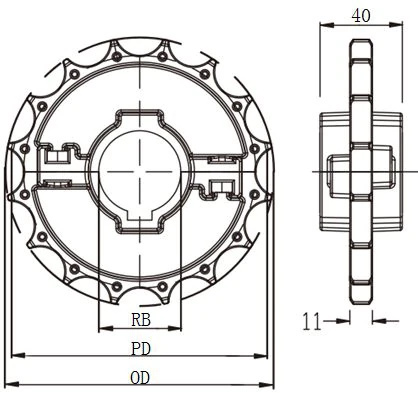
Dişli çarklar pozitif tahrik ilişkisini sağlar. Diş sayısı, adım çapı, delik çapı, göbek veya bölünmüş yapı, şaft kama bağlantısı ve eksenel konum birlikte incelenmelidir. Kötü hizalama, yükün kayış genişliğinin yalnızca bir kısmına yoğunlaşmasına neden olabilirken, uygunsuz bir sabitleme düzeni termal hareketi engelleyebilir.
Installation and commissioning
Before installation, inspect guides, supports, shafts, sprockets and transfer parts for wear or interference. Fit the belt or chain without forcing joints. Rotate the drive slowly or jog the machine at low speed to confirm clean tooth engagement across the width, stable guide contact and a controlled return path.
After loading representative product, observe transfers, curves, accumulation zones and any incline. Repeated impact, local lifting, scraping or a change in drive noise usually deserves mechanical investigation before continued production.
Inspection and maintenance
Bakım, denetim odaklı olduğunda en etkili olur. Operatörler menteşe alanlarını, çubukları, kılavuz temasını, dişli çark bağlantısını, olağandışı sesi, yerel aşınmayı, ürün birikimini ve geri dönüş yolundaki herhangi bir değişikliği izlemelidir. Hizalamayı veya kirlenmeyi düzeltmeden aşınmış bir parçayı değiştirmek, sorunu yalnızca başka bir yere taşıyabilir.
Cleaning or sanitation methods should be compatible with the selected material and with rollers, elastomers, magnets or retention features on the exact series.
Teklif talebi (RFQ) hazırlığı
OEM ve yenileme projeleri için, iyi bir teklif talebi (RFQ), onaylanmış verileri açık sorulardan ayırır. Onaylanmış boyutlar, birimleri ve ölçüm yöntemiyle birlikte listelenmelidir. Bilinmeyen malzeme, yük, hız veya kimyasal maruziyet, tahmin edilmek yerine onaylanması için işaretlenmelidir.
- Series or existing marking
- Pitch and assembled width
- Overall conveyor layout and curve direction
- Sprocket tooth count, bore and shaft
- Product load, speed, temperature and wet/dry conditions
- Quantity and sample/replacement/OEM status
Sıkça sorulan sorular
Can a replacement be selected from a photograph alone?
Photos help with identification, but pitch, width, hinge/rod geometry and the drive interface should also be measured.
Do existing sprockets need replacement?
Not always. Check series compatibility, tooth condition, bore/shaft fit and wear before reusing them.
Can material be changed independently of geometry?
Material changes can alter temperature capability, friction and wear. Use the listed options as the starting point and request confirmation for alternatives.
How should non-standard width be requested?
Send the required assembled width and the measured module increment or an existing sample. Width rules differ by series.
What speeds the quotation?
Series, pitch, width, sprocket/shaft data, application, operating conditions, quantity and drawings or clear photos.
Fit and release checks for this series
Use the available series dimensions together with the actual conveyor interfaces. The final release should identify what is confirmed and what still needs measurement.
Confirm the stated side-flex radius or radius geometry together with belt width and guide path.
Inspect inner/outer guide contact and any TAB, magnetic or retention feature against the conveyor track.
Record compatible sprocket or mounting geometry, shaft/bore information and the condition of existing mating components.
State product, load, speed, temperature, moisture, cleaning, accumulation and transfer conditions that apply to this project.
Confirmed series data to carry into the RFQ
Pitch: 25.4 mm; Minimum backflex radius: 130 mm; Minimum sideflex radius: 500 mm; Maximum working load at 21°C: 1650 N; Working temperature, dry: 4–64 °C; Working temperature, wet: 4–64 °C. Use these values only for the exact series shown on this page; any project-specific dimension or alternative material should be confirmed before ordering.
For a replacement, add photographs of the existing top surface, underside, edge/hinge area, drive sprockets and return end. For a new machine, add the conveyor layout and the product path so support, guides and transfers can be reviewed with the selected component.
How to apply the series data on the machine
The listed values define the series, while the conveyor decides whether that series is appropriate for the project.
Machine fit
On a curved conveyor, check the actual inside guide path through the full turn and verify that the assembled width and lateral articulation match the line. The drive and return sections must transition into the curve without forcing the chain or belt sideways.
Useful confirmed values on this page include pitch 25.4 mm, minimum backflex radius 130 mm, minimum sideflex radius 500 mm, maximum working load at 21°c 1650 N, working temperature, dry 4–64 °C. Keep the unit and the exact parameter name with the purchasing record so the value is not separated from its meaning.
Inspection focus
Warning signs include inner-edge polishing, outer-edge lift, unstable guide contact or irregular motion through the transition between straight and curved sections.
Before reusing surrounding parts, clean and inspect the mating surfaces and drive elements. Photograph any abnormal wear before disassembly; the wear pattern can help explain why the previous component failed or became unstable.
| Kontrol etmek | Pratik inceleme |
|---|---|
| Existing machine | Measure the part and the surrounding conveyor independently. Do not assume a worn component still shows the original nominal dimension. |
| New machine | Confirm machine envelope, support, drive, transfer and service access before final series release. |
| Alternative option | If material or configuration may change, state which machine dimensions are fixed and which product variables are flexible. |
| Purchase record | Keep series, width, drive/mounting data, operating conditions and any accepted drawing revision together. |
Commissioning record for 1050 Magnetic Sideflex Single Hinge Chain
Confirm assembly, belt or chain seating, drive/mounting alignment and clearance to stationary parts. Rotate or jog slowly when the machine permits.
Use representative product and observe the most demanding zone: curve, accumulation, incline, transfer or return support as applicable.
Check for localized wear, new noise, edge contact, rod movement, product marks or debris concentration. Record the location of any abnormality.
Keep the final series, installed width, mating component data and operating condition with the maintenance record for future replacement.
Additional series data carried on this page includes Working temperature, dry: 4–64 °C; Working temperature, wet: 4–64 °C; Weight: 1.5 kg/m; Material options: XLG / PS. Do not detach these values from the exact series or configuration when preparing a purchase description. If the machine requires a different width, material, mounting or drive arrangement, flag the change for confirmation rather than treating it as an automatic option.
Request a series-level quotation
Send the series/model when known, measured dimensions, drive or mounting data, operating conditions, quantity and drawings or photographs. Open points can remain explicit until confirmed.