Trả lời trước
- Hãy xác nhận giao diện có thể đo lường được trước khi chọn sản phẩm thay thế.
- Giữ nguyên các giới hạn của từng dòng sản phẩm đã công bố, đảm bảo phù hợp với vật liệu và hình dạng hình học chính xác.
- Hãy ghi lại bất kỳ giá trị chưa xác định nào như một mục xác nhận yêu cầu báo giá thay vì ước tính nó.
The safest approach to assembled width rules and replacement measurement is to treat belt, chain, sprockets, support, guides, transfers and environment as one system. Start with measured geometry and duty conditions, eliminate incompatible configurations, and only then finalize material and accessories.
1. Định nghĩa sản phẩm và quy trình
Ghi lại kích thước sản phẩm, trọng lượng, hình dạng đáy, nhiệt độ, độ ổn định và liệu có dự kiến tích tụ hay không. Thêm yêu cầu của quy trình: rửa, xả, làm nguội, gia nhiệt, kiểm tra, đệm, hợp nhất hoặc vận chuyển.
Môi trường hoạt động rất quan trọng vì vật liệu nhựa nhiệt dẻo phản ứng khác nhau với nhiệt độ, độ ẩm, hóa chất, sự mài mòn và tiếp xúc trượt liên tục. Các giá trị được công bố trong bộ sản phẩm nên được sử dụng cùng với mã vật liệu và phạm vi nhiệt độ đã nêu. Không nên thay thế một vật liệu chỉ vì nó có màu sắc tương tự; màu sắc không phải là phương pháp nhận dạng vật liệu đủ hiệu quả.
2. Xác định hình dạng hình học của băng tải
Hệ thống truyền động thẳng và truyền động bán kính đặt ra những yêu cầu hình học khác nhau. Các mô-đun truyền động thẳng khớp nối quanh các bánh răng theo hướng chuyển động, trong khi thiết kế bán kính hoặc uốn cong bên phải đáp ứng cả sự khớp nối ngang thông qua một đường cong được kiểm soát. Không bao giờ được ép một dây đai thẳng đi qua một đường cong chỉ vì chiều rộng của nó phù hợp với khung.
Đo chiều dài đoạn thẳng, góc nghiêng, góc cong, bán kính trong, chiều rộng băng tải, tâm trục, chiều cao chuyển tải và đường quay trở lại.
3. Đo chiều dài dây đai hoặc xích hiện có.
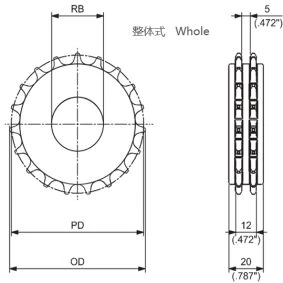
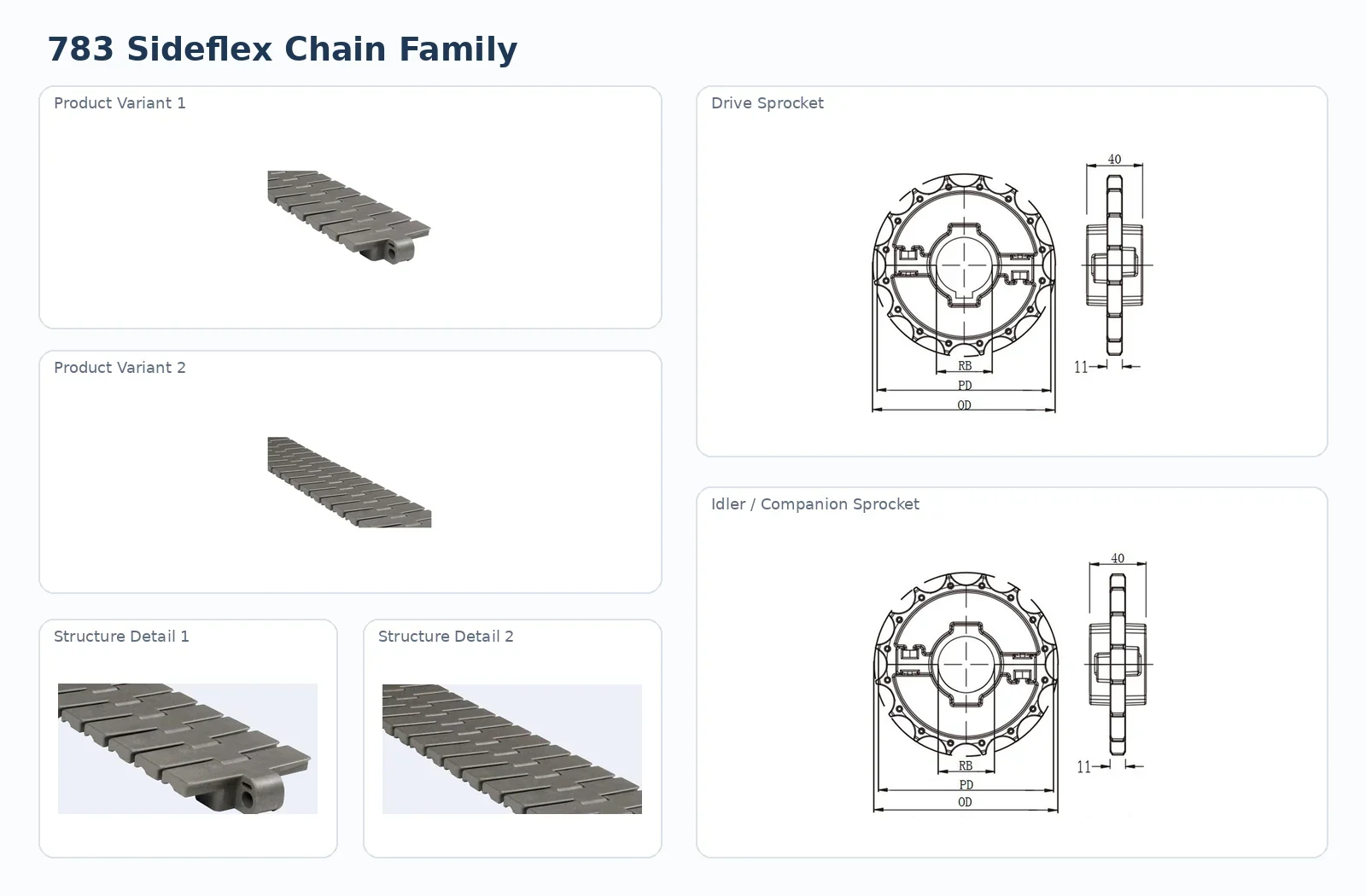
Đối với công việc thay thế, thông tin hữu ích nhất ban đầu là thông tin nhận dạng dây đai hoặc xích hiện có, bước răng, chiều rộng khi lắp ráp, bố trí bản lề hoặc thanh nối, hình dạng cạnh, số răng đĩa xích, đường kính lỗ đĩa xích, kích thước trục và hình ảnh rõ nét của đầu truyền động và đầu hồi chuyển. Khi ký hiệu cũ không thể đọc được, bản phác thảo có kích thước và một vài hình ảnh chụp vuông góc sẽ đáng tin cậy hơn một hình ảnh phối cảnh duy nhất.
4. Phù hợp với động lực tích cực
Các bánh răng xích tạo nên mối quan hệ truyền động thuận. Số răng, đường kính bước răng, đường kính lỗ trục, cấu trúc trục chính hoặc trục chia, kiểu then trục và vị trí trục cần được xem xét cùng nhau. Sự lệch trục có thể tập trung tải trọng chỉ vào một phần chiều rộng của đai, trong khi cách bố trí cố định không phù hợp có thể cản trở sự giãn nở nhiệt.
5. Xem xét lại hỗ trợ, hướng dẫn và chuyển khoản
Các bộ phận chuyển tiếp cần được chú trọng về mặt kỹ thuật như các đoạn băng tải dài. Các sản phẩm nhỏ hoặc không ổn định có thể cần đến tấm lược, cầu lăn, bộ phận định vị đầu hoặc hình dạng tấm chắn được kiểm soát. Mục tiêu không chỉ đơn thuần là một khe hở nhỏ có thể nhìn thấy; giao diện phải hỗ trợ sản phẩm và tránh sự va chạm giữa các mô-đun chuyển động và các bộ phận cố định.
| Giao diện | Kiểm tra kỹ thuật |
|---|---|
| Hỗ trợ đường vận chuyển | Bề mặt đỡ phải phù hợp với hình dạng và tải trọng của mô-đun. |
| Đường quay lại | Ngăn ngừa hiện tượng sụt áp hoặc nhiễu sóng không kiểm soát được. |
| Hướng dẫn | Kiểm soát sản phẩm mà không làm lệch dây đai/xích ra khỏi đường đi dự định. |
| Chuyển khoản | Kiểm tra khe hở giữa lược, cầu lăn hoặc tấm chắn nhiệt. |
| Lái xe | Xác nhận sự tiếp xúc và thẳng hàng của răng một cách chính xác. |
6. Vận hành và bảo trì
Công tác bảo trì hiệu quả nhất khi được thực hiện dựa trên việc kiểm tra. Người vận hành nên theo dõi các khu vực bản lề, thanh truyền, tiếp xúc dẫn hướng, sự ăn khớp của bánh răng, tiếng ồn bất thường, sự mài mòn cục bộ, sự tích tụ sản phẩm và bất kỳ thay đổi nào trong đường dẫn hồi. Việc thay thế một bộ phận bị mòn mà không điều chỉnh sự thẳng hàng hoặc loại bỏ chất bẩn có thể chỉ chuyển vấn đề sang một vị trí khác.
Ghi lại chuỗi lắp đặt cuối cùng, dữ liệu bánh răng, bố trí trục, kích thước then và bất kỳ yêu cầu đặc biệt nào về vật liệu hoặc quy trình làm sạch.
danh sách kiểm tra yêu cầu báo giá
Đối với các dự án OEM và nâng cấp, một yêu cầu báo giá (RFQ) tốt cần phân tách dữ liệu đã được xác nhận khỏi các câu hỏi chưa được giải đáp. Kích thước đã được xác nhận cần được liệt kê kèm đơn vị và phương pháp đo. Vật liệu, tải trọng, tốc độ hoặc tiếp xúc hóa chất chưa biết cần được đánh dấu để xác nhận thay vì ước tính.
Câu hỏi thường gặp
Tôi nên đo kích thước nào trước?
Bắt đầu bằng cách xác định bước ren và chiều rộng khi lắp ráp, sau đó ghi lại vị trí đường bản lề/thanh nối, mép đai và giao diện giữa bánh răng/trục.
Có thể vẽ tranh theo tỷ lệ từ một bức ảnh không?
Không thể đo chính xác trừ khi có thước đo nằm trên cùng một mặt phẳng. Nên sử dụng phương pháp đo trực tiếp bất cứ khi nào có thể.
Nếu bộ phận đó không có ký hiệu nào dễ đọc thì sao?
Vui lòng gửi nhiều ảnh, bao gồm thông số bước răng, chiều rộng, hình dạng hình học của hệ thống truyền động mặt dưới, số răng và đường kính lỗ của đĩa xích, và nếu có thể, hãy gửi kèm một mẫu.
Khi dây đai cũ bị mòn nhanh, liệu có nên thay thế chất liệu không?
Trước tiên hãy xác định cơ chế mài mòn. Sự thẳng hàng, giá đỡ, sự nhiễm bẩn và nhiệt độ có thể quan trọng hơn vật liệu.
Làm thế nào để so sánh hai ứng viên?
So sánh hình học, chức năng bề mặt, tải trọng, nhiệt độ, cấu trúc chiều rộng, giới hạn bán kính/độ uốn cong ngược và các yêu cầu về đĩa xích/linh kiện.
Decision framework
Understanding Modular Belt Width and Module Increments: what the engineering review must decide
Begin with the machine, not the catalogue page. For this topic, the central issue is replacement identification and measurement discipline. The useful question is whether the proposed component fits the actual conveyor interfaces and duty. The project record should connect the visible condition, the measured interface and the operating duty so that a proposed series can be checked against the same evidence later.
Start by identifying which parts of the system are fixed by the machine and which are still open to selection. A shaft, guide path, transfer location or process envelope may be fixed, while material, surface, exact series or component configuration can remain open. Making that distinction early prevents the engineering discussion from treating every catalogue option as interchangeable.
| Decision variable | What to document |
|---|---|
| pitch measured over multiple pitches | Record the project value or condition and note how it was confirmed before release. |
| assembled width and module increment | Record the project value or condition and note how it was confirmed before release. |
| hinge/rod line and edge profile | Record the project value or condition and note how it was confirmed before release. |
| underside drive geometry | Record the project value or condition and note how it was confirmed before release. |
| sprocket bore, tooth count and shaft details | Record the project value or condition and note how it was confirmed before release. |
Field method
Measure the interfaces that control this decision
For replacement identification and measurement discipline, the most useful field record covers pitch, width, thickness where relevant, hinge/rod axis, underside drive features, edge construction and the drive/return components in separate perpendicular views. Measurements should be taken on a clean, supported component whenever possible. If wear is present, record the worn condition and avoid treating it as the original nominal geometry.
Use direct dimensions with units and take more than one reading when wear, articulation or assembly tolerances can affect the result. A photograph should show the measuring tool in the same plane as the feature being checked; a second perpendicular photograph provides context that a single perspective image cannot. When a dimension cannot be obtained reliably, mark it as open rather than estimating it.
The machine layout matters as much as the loose part. Record the drive end, return end, guide arrangement, transfer zone and any location where the belt changes direction or experiences unusual product pressure. That context explains why two parts with similar overall dimensions may behave differently in service.
Khắc phục sự cố
Interpret the symptom before changing the component
Wear is evidence of a contact or operating condition. Use the pattern to decide what to inspect next rather than replacing the most visible worn part automatically.
Review “estimating from a perspective photograph” against the measured conveyor interface and the operating state described in this guide. Compare drive, support, guide, return and transfer conditions, then record the specific evidence that supports the corrective action before changing the released configuration.
Record the interface dimension with units and the exact measurement point. Separate direct measurements from nominal values, and keep any unknown width increment, edge construction or mounting detail open until it can be confirmed.
Review “assuming an obsolete part interchanges from color or overall shape” against the measured conveyor interface and the operating state described in this guide. Compare drive, support, guide, return and transfer conditions, then record the specific evidence that supports the corrective action before changing the released configuration.
Review “losing units or measurement method in the purchasing handoff” against the measured conveyor interface and the operating state described in this guide. Compare drive, support, guide, return and transfer conditions, then record the specific evidence that supports the corrective action before changing the released configuration.
A single symptom rarely proves the root cause. Compare left and right sides, drive and return zones, loaded and unloaded operation, and the condition of mating parts. If a problem appears only after product accumulation, washdown, temperature change or a line-speed change, include that operating state in the investigation. This is especially important when the existing system ran acceptably before a process change.
Machine integration
Review the complete conveyor around the selected item
Use a simple sequence: confirm the product path, identify the belt or chain motion type, verify the positive-drive or mounting interface, review carry-way and return support, then check guides and transfers. The order matters because a change made to solve one zone can create a new interference or wear point elsewhere.
For this article, a representative review scenario is a replacement project where the original part number is unreadable and the engineering review must identify the belt from measured interfaces and photographs. The technical review should therefore include the most demanding zone, not only the longest straight span. Where the product changes direction, accumulates, enters a transfer or experiences washdown, note the local geometry and the component that carries or constrains the load.
Keep safety guarding, access and the machine maker’s procedures outside the component-selection assumptions. The conveyor component data can support fit and operating review, but machine-level safety and commissioning remain part of the equipment design and site procedure.
Worked review
How to compare alternatives without inventing missing data
Assume the current line has a known product path and an existing component that may need replacement. First, write down the values that are physically measured or clearly identified. Next, list the parameters that come from the exact candidate series. Keep those two groups separate. A published material or operating value belongs to the candidate series; a shaft diameter, guide spacing or installed width belongs to the machine.
Then compare the fixed interfaces with each candidate. Reject an option when a required geometry is incompatible rather than trying to compensate with guide pressure, forced articulation or an improvised sprocket. If several options remain, compare the functional differences that matter to the process: contact surface, open area, rolling or gripping function, curve capability, transfer behavior, cleaning access or component serviceability. The choice should be traceable to the process requirement rather than to color or appearance.
Finally, identify what would still have to be confirmed before order release. The open item might be a material requirement, a drawing dimension, a bore/keyway detail, an exact installed width or an operating exposure. State who will confirm it and by what evidence. This makes the quotation useful even before every question is closed and avoids hiding uncertainty inside an assumed specification.
Procurement handoff
Build a purchase description that can be checked later
The handoff should preserve the relationship between the selected component and the machine. For this topic, keep dimensioned sketch, perpendicular photographs, physical sample when available, drive data, operating conditions and quantity together in the RFQ or purchase record. Attach the layout or photographs used for the decision and identify any accepted alternative rather than relying on an informal description such as “same as existing.”
| Record | Purpose |
|---|---|
| Component identity | Series/model or the measured identification basis when the marking is unavailable. |
| Machine interface | Dimensions, shaft/mounting, guides, support, transfer and surrounding fixed geometry relevant to the topic. |
| Operating duty | Product/load, speed context, temperature, wet/dry condition, cleaning or other process exposure that affects selection. |
| Điểm mở | Items that still require a drawing, sample, second measurement or engineering confirmation. |
| Revision record | The final accepted drawing, series/configuration and any change from the previous installation. |
This record is also valuable for maintenance. If the conveyor is modified later, the team can see which assumptions belonged to the original selection and decide whether the changed product, speed, guide path, cleaning process or transfer geometry requires a fresh review.
Commissioning
Check the first run against the engineering assumptions
When the machine procedure permits, begin with an unloaded or lightly loaded check. Observe the drive or mounting interface, guide contact, carry-way support, return path and clearances to stationary parts. Then introduce representative product and watch the zone that drove the selection decision. The objective is to verify that the installed behavior matches the assumptions documented during selection.
Listen for new cyclic noise and inspect for localized rubbing, lifting, rod movement, edge contact, product marking or debris concentration. A small early change can be easier to correct before it becomes a wear pattern. Record the first inspection condition so later maintenance has a baseline rather than relying on memory.
If the result differs from the expected behavior, return to the measured interface and operating condition before changing material or series again. A component change cannot correct a misaligned shaft, an interfering guide or a transfer that physically constrains the belt outside its intended articulation.
Release checklist
Questions to close before ordering
- Is the exact motion type or component function identified?
- Are the controlling machine dimensions recorded with units?
- Are mating sprockets, shafts, guides, supports or transfer parts documented?
- Are product, load and operating conditions representative of actual duty?
- Are material or special-process requirements tied to the exact series rather than inferred?
- Are worn or modified surrounding parts identified separately from the proposed replacement?
- Are all unknown values explicitly listed for confirmation?
- Does the RFQ include quantity plus clear drawings, photographs or a sample when available?
Closing these questions produces a stronger engineering request and reduces the chance that a quotation is based on visual similarity alone. If a value remains unknown, leave it open and state the evidence needed to close it; do not invent a number to make the request appear complete.