Series / Product
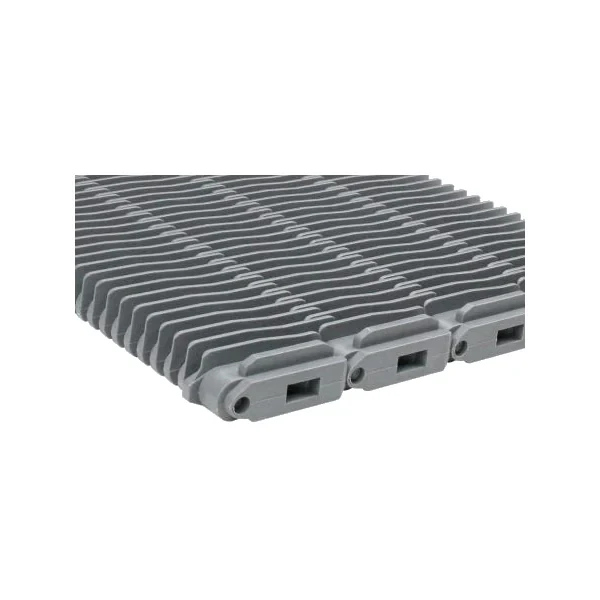
400 Series Super Rib Straight Run Belt
Taśma prostobieżna Super Rib serii 400 do transportu przemysłowego i prac wymiennych, z wymiarami specyficznymi dla danej serii, kontrolą interfejsów i wskazówkami dotyczącymi zapytań ofertowych.
- Pitch
- 50.8 mm
- Minimum backflex radius
- 100 mm
- Maximum working load at 21°C
- 29,500 N
- Working temperature
- 4–104 °C dry/wet
For replacement work, send the existing series/model when known plus measured width, pitch and drive-interface details. Unknown values can remain open for confirmation.
Product overview
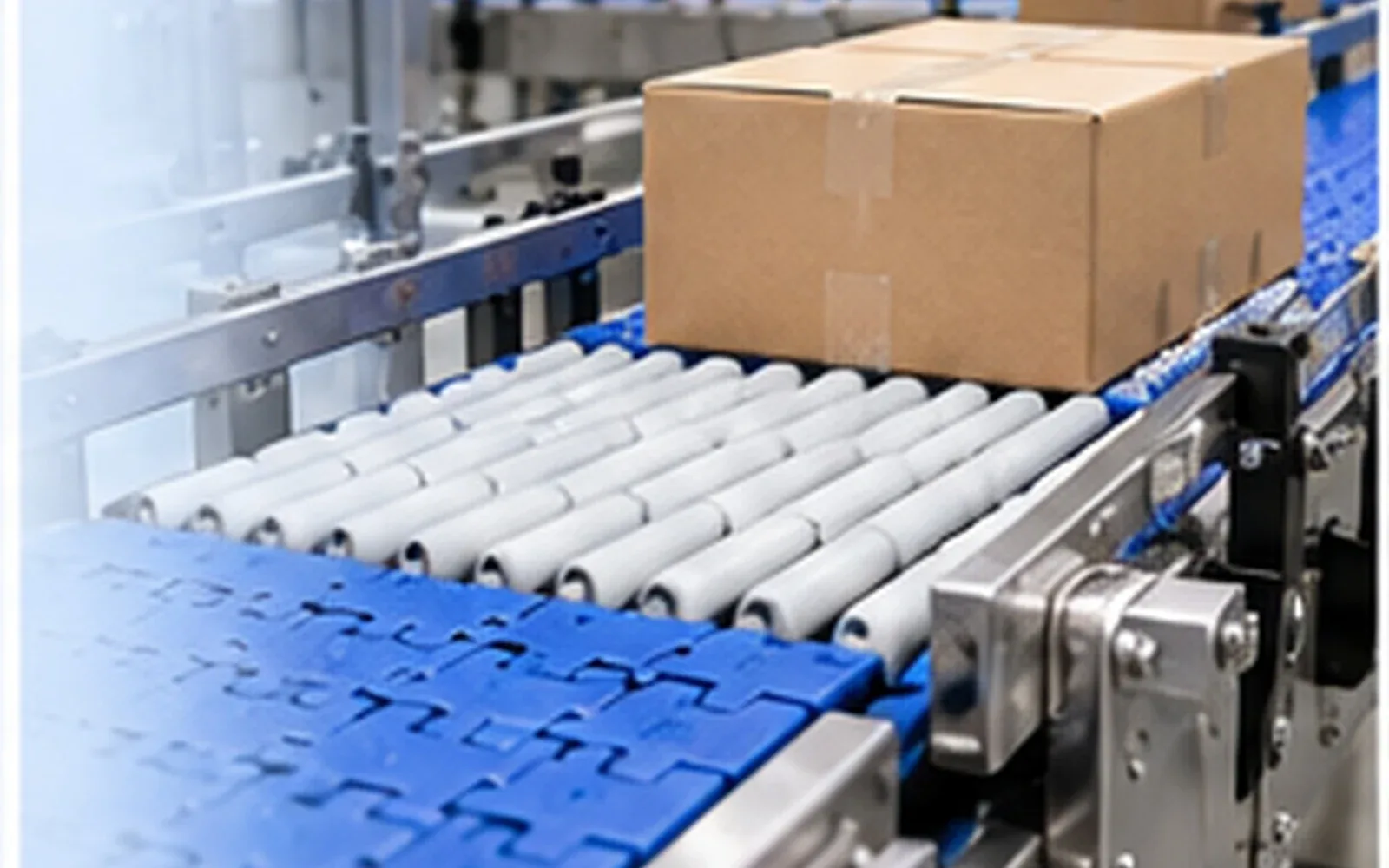
400 Series Super Rib Straight Run Belt is presented as an industrial conveyor component for OEM, replacement and line-development work. This page keeps the series identity and available technical data together, then explains the surrounding interfaces that determine whether a replacement or new installation will fit and run correctly.
A plastic modular conveyor is a positive-drive system. The belt or chain should be selected as part of a complete mechanical interface that includes the conveyed product, support surface, shaft arrangement, sprocket position, return path, guides, transfers, temperature, cleaning regime, and accumulation behavior. A small geometric mismatch can alter articulation or tooth engagement, so purchasing decisions should be based on measured interfaces rather than visual similarity alone. For replacement work, the most useful starting information is the existing belt or chain identification, pitch, assembled width, hinge or rod arrangement, edge profile, sprocket tooth count, sprocket bore, shaft size, and clear photographs of the drive and return ends. When a legacy marking is unreadable, a dimensioned sketch and several perpendicular photographs are more reliable than one perspective image.
Structure and interface
Systemy prostobieżne i promieniowe stawiają różne wymagania geometryczne. Moduły prostobieżne poruszają się wokół kół zębatych w kierunku jazdy, podczas gdy konstrukcja promieniowa lub boczna musi również uwzględniać ruch poprzeczny w kontrolowanym łuku. Pas prosty nigdy nie powinien być forsowany na łuku tylko dlatego, że jego szerokość pasuje do ramy.
Check the hinge line, edge geometry, underside drive features and any retention elements against the existing system. Do not identify the product from color alone.
Technical specifications
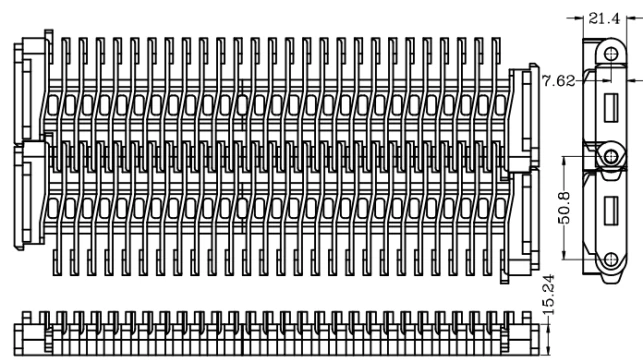
Use the series-specific values below when checking fit, operating conditions and drive compatibility. Confirm project conditions before release.
| Parameter | Value |
|---|---|
| Pitch | 50.8 mm |
| Minimum backflex radius | 100 mm |
| Maximum working load at 21°C | 29,500 N |
| Working temperature | 4–104 °C dry/wet |
| Weight | 9.7 kg/m² |
| Material code | XP |
| Standard assembly width | W = 457.2 × N |
| Surface | Super Rib |
Selection checks
Confirm straight, radius, incline, accumulation and transfer duty.
Measure pitch, assembled width, hinge/rod position and any retention features.
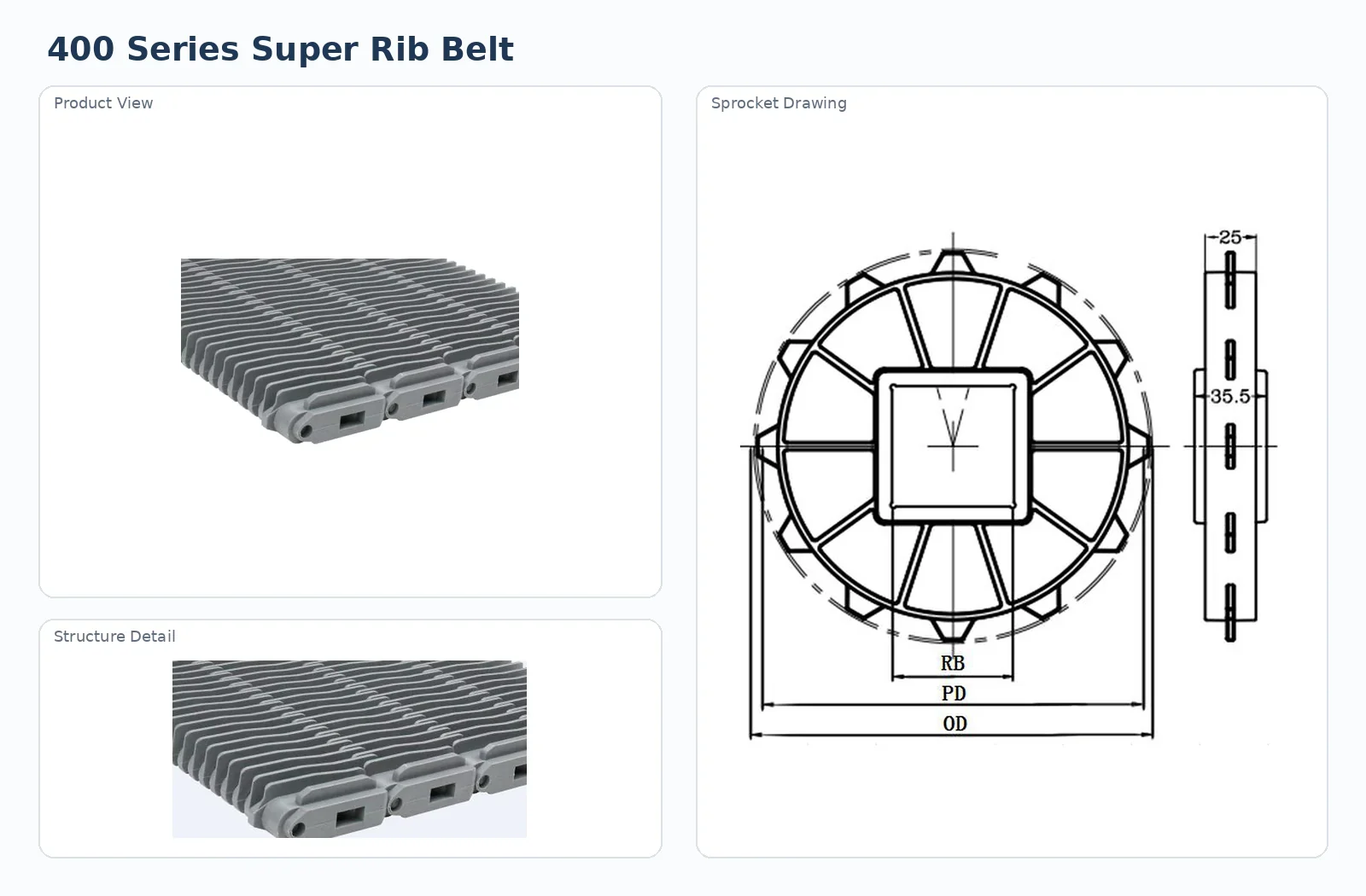
Confirm compatible sprocket series, tooth count, bore and shaft.
State temperature, wet/dry duty, cleaning chemistry and special material needs.
Środowisko pracy ma znaczenie, ponieważ materiały termoplastyczne inaczej reagują na temperaturę, wilgoć, substancje chemiczne, ścieranie i ciągły kontakt ślizgowy. Opublikowane wartości serii należy stosować łącznie z podanymi kodami materiałów i zakresami temperatur. Materiału nie należy zastępować wyłącznie ze względu na podobny kolor; kolor nie jest wystarczającą metodą identyfikacji materiału.
Application planning
The series must be reviewed with product footprint, load, stability, speed, transfer sensitivity, accumulation and cleaning access. For curves, the side-flexing geometry and guide path become part of the selection. For straight conveyors, support and drive alignment remain equally important.
Transfery wymagają takiej samej uwagi inżynieryjnej, jak długi rozstaw przenośnika. Małe lub niestabilne produkty mogą wymagać płyty grzebieniowej, mostka rolkowego, układu nosków lub kontrolowanej geometrii płyty martwej. Celem nie jest jedynie mała widoczna szczelina; interfejs musi podtrzymywać produkt i zapobiegać kolizji między ruchomymi modułami a częściami nieruchomymi.
Drive and sprocket matching
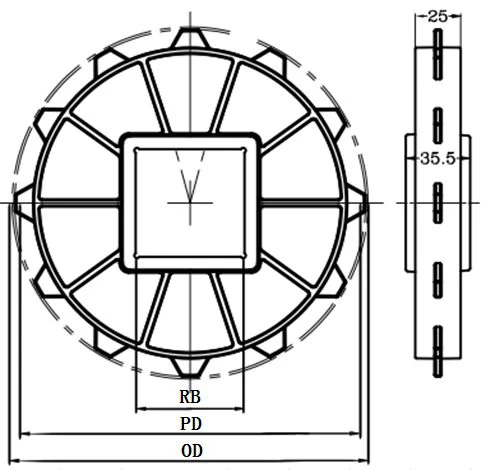
Koła zębate zapewniają napęd bezpotencjałowy. Należy łącznie przeanalizować liczbę zębów, średnicę podziałową, otwór, piastę lub konstrukcję dzieloną, klinowanie wału oraz położenie osiowe. Niewłaściwe ustawienie może koncentrować obciążenie tylko na części szerokości pasa, a niewłaściwe zamocowanie może zakłócać ruch termiczny.
Installation and commissioning
Before installation, inspect guides, supports, shafts, sprockets and transfer parts for wear or interference. Fit the belt or chain without forcing joints. Rotate the drive slowly or jog the machine at low speed to confirm clean tooth engagement across the width, stable guide contact and a controlled return path.
After loading representative product, observe transfers, curves, accumulation zones and any incline. Repeated impact, local lifting, scraping or a change in drive noise usually deserves mechanical investigation before continued production.
Inspection and maintenance
Konserwacja jest najskuteczniejsza, gdy opiera się na inspekcji. Operatorzy powinni monitorować obszary zawiasów, pręty, styk prowadnicy, zazębienie kół zębatych, nietypowe hałasy, lokalne zużycie, nagromadzenie produktu oraz wszelkie zmiany w drodze powrotnej. Wymiana jednego zużytego elementu bez skorygowania ustawienia lub zanieczyszczenia może jedynie przenieść problem w inne miejsce.
Cleaning or sanitation methods should be compatible with the selected material and with rollers, elastomers, magnets or retention features on the exact series.
Przygotowanie zapytania ofertowego
W przypadku projektów OEM i modernizacji, dobre zapytanie ofertowe (RFQ) oddziela dane potwierdzone od pytań otwartych. Potwierdzone wymiary powinny być wymienione wraz z jednostkami i metodą pomiaru. Nieznany materiał, obciążenie, prędkość lub narażenie na działanie substancji chemicznych powinny być oznaczone jako dane potwierdzające, a nie szacunkowe.
- Series or existing marking
- Pitch and assembled width
- Overall conveyor layout and curve direction
- Sprocket tooth count, bore and shaft
- Product load, speed, temperature and wet/dry conditions
- Quantity and sample/replacement/OEM status
Często zadawane pytania
Can a replacement be selected from a photograph alone?
Photos help with identification, but pitch, width, hinge/rod geometry and the drive interface should also be measured.
Do existing sprockets need replacement?
Not always. Check series compatibility, tooth condition, bore/shaft fit and wear before reusing them.
Can material be changed independently of geometry?
Material changes can alter temperature capability, friction and wear. Use the listed options as the starting point and request confirmation for alternatives.
How should non-standard width be requested?
Send the required assembled width and the measured module increment or an existing sample. Width rules differ by series.
What speeds the quotation?
Series, pitch, width, sprocket/shaft data, application, operating conditions, quantity and drawings or clear photos.
Fit and release checks for this series
Use the available series dimensions together with the actual conveyor interfaces. The final release should identify what is confirmed and what still needs measurement.
Confirm the raised or high-friction surface suits the product contact, cleaning method and incline/transfer duty.
Check any comb, bridge or downstream transfer against the actual surface height and module geometry.
Record compatible sprocket or mounting geometry, shaft/bore information and the condition of existing mating components.
State product, load, speed, temperature, moisture, cleaning, accumulation and transfer conditions that apply to this project.
Confirmed series data to carry into the RFQ
Pitch: 50.8 mm; Minimum backflex radius: 100 mm; Maximum working load at 21°C: 29,500 N; Working temperature: 4–104 °C dry/wet; Weight: 9.7 kg/m²; Material code: XP. Use these values only for the exact series shown on this page; any project-specific dimension or alternative material should be confirmed before ordering.
For a replacement, add photographs of the existing top surface, underside, edge/hinge area, drive sprockets and return end. For a new machine, add the conveyor layout and the product path so support, guides and transfers can be reviewed with the selected component.
How to apply the series data on the machine
The listed values define the series, while the conveyor decides whether that series is appropriate for the project.
Machine fit
Review the raised or high-friction surface with the real product base, incline or transfer arrangement and cleaning method. Surface height and grip can change the way a package releases at the discharge.
Useful confirmed values on this page include pitch 50.8 mm, minimum backflex radius 100 mm, maximum working load at 21°c 29,500 N, working temperature 4–104 °C dry/wet, weight 9.7 kg/m². Keep the unit and the exact parameter name with the purchasing record so the value is not separated from its meaning.
Inspection focus
Look for uneven surface wear, product marking, poor release or contamination trapped around raised features. These observations should be considered with the support and transfer layout.
Before reusing surrounding parts, clean and inspect the mating surfaces and drive elements. Photograph any abnormal wear before disassembly; the wear pattern can help explain why the previous component failed or became unstable.
| Sprawdzać | Przegląd praktyczny |
|---|---|
| Existing machine | Measure the part and the surrounding conveyor independently. Do not assume a worn component still shows the original nominal dimension. |
| New machine | Confirm machine envelope, support, drive, transfer and service access before final series release. |
| Alternative option | If material or configuration may change, state which machine dimensions are fixed and which product variables are flexible. |
| Purchase record | Keep series, width, drive/mounting data, operating conditions and any accepted drawing revision together. |
Commissioning record for 400 Series Super Rib Straight Run Belt
Confirm assembly, belt or chain seating, drive/mounting alignment and clearance to stationary parts. Rotate or jog slowly when the machine permits.
Use representative product and observe the most demanding zone: curve, accumulation, incline, transfer or return support as applicable.
Check for localized wear, new noise, edge contact, rod movement, product marks or debris concentration. Record the location of any abnormality.
Keep the final series, installed width, mating component data and operating condition with the maintenance record for future replacement.
Additional series data carried on this page includes Weight: 9.7 kg/m²; Material code: XP; Standard assembly width: W = 457.2 × N; Surface: Super Rib. Do not detach these values from the exact series or configuration when preparing a purchase description. If the machine requires a different width, material, mounting or drive arrangement, flag the change for confirmation rather than treating it as an automatic option.
Request a series-level quotation
Send the series/model when known, measured dimensions, drive or mounting data, operating conditions, quantity and drawings or photographs. Open points can remain explicit until confirmed.