Series / Product
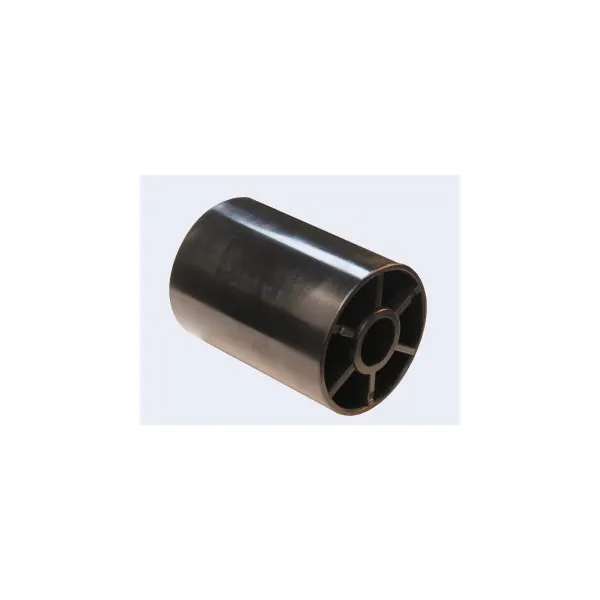
Return Roller PJ0028
Rouleau de retour PJ0028 pour le convoyage industriel et les travaux de remplacement, avec des dimensions spécifiques à la série, des contrôles d'interface et des conseils RFQ.
- Matériel
- PP
- Roller body length
- 80 mm
- Overall length
- 83.5 mm
- Outer diameter
- 50 mm
For replacement work, send the existing series/model when known plus measured width, pitch and drive-interface details. Unknown values can remain open for confirmation.
Product overview
Return Roller PJ0028 is presented as an industrial conveyor component for OEM, replacement and line-development work. This page keeps the series identity and available technical data together, then explains the surrounding interfaces that determine whether a replacement or new installation will fit and run correctly.
A plastic modular conveyor is a positive-drive system. The belt or chain should be selected as part of a complete mechanical interface that includes the conveyed product, support surface, shaft arrangement, sprocket position, return path, guides, transfers, temperature, cleaning regime, and accumulation behavior. A small geometric mismatch can alter articulation or tooth engagement, so purchasing decisions should be based on measured interfaces rather than visual similarity alone. For replacement work, the most useful starting information is the existing belt or chain identification, pitch, assembled width, hinge or rod arrangement, edge profile, sprocket tooth count, sprocket bore, shaft size, and clear photographs of the drive and return ends. When a legacy marking is unreadable, a dimensioned sketch and several perpendicular photographs are more reliable than one perspective image.
Structure and interface
Les systèmes à courroie rectiligne et à courbure variable imposent des contraintes géométriques différentes. Les modules à courroie rectiligne s'articulent autour des pignons dans le sens de la marche, tandis qu'une conception à courbure variable ou à flexion latérale doit également permettre une articulation latérale le long d'une courbe contrôlée. Une courroie droite ne doit jamais être forcée dans une courbe simplement parce que sa largeur correspond à celle du châssis.
Check the hinge line, edge geometry, underside drive features and any retention elements against the existing system. Do not identify the product from color alone.
Technical specifications
Use the series-specific values below when checking fit, operating conditions and drive compatibility. Confirm project conditions before release.
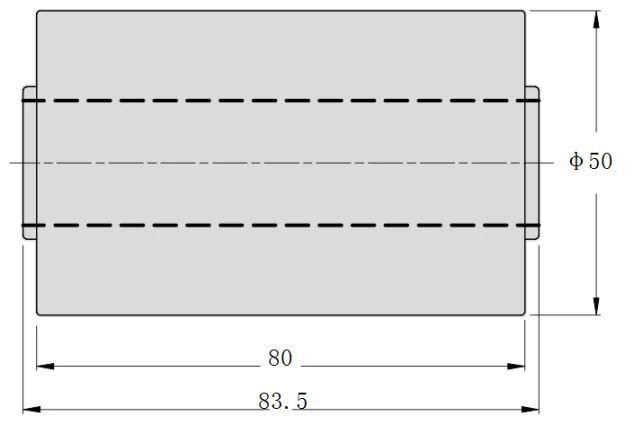
| Parameter | Value |
|---|---|
| Matériel | PP |
| Roller body length | 80 mm |
| Overall length | 83.5 mm |
| Outer diameter | 50 mm |
| Bore options | 16.5 / 18.5 / 20.5 mm |
Selection checks
Confirm straight, radius, incline, accumulation and transfer duty.
Measure pitch, assembled width, hinge/rod position and any retention features.
Confirm compatible sprocket series, tooth count, bore and shaft.
State temperature, wet/dry duty, cleaning chemistry and special material needs.
L'environnement d'utilisation est important car les matériaux thermoplastiques réagissent différemment à la température, à l'humidité, aux produits chimiques, à l'abrasion et au frottement continu. Les valeurs des séries publiées doivent être utilisées conjointement avec leurs codes de matériau et leurs plages de température respectifs. Un matériau ne doit pas être substitué à un autre uniquement sur la base d'une couleur similaire ; la couleur n'est pas un critère d'identification suffisant.
Application planning
The series must be reviewed with product footprint, load, stability, speed, transfer sensitivity, accumulation and cleaning access. For curves, the side-flexing geometry and guide path become part of the selection. For straight conveyors, support and drive alignment remain equally important.
Les transferts méritent la même attention en ingénierie que les convoyeurs de grande longueur. Les produits petits ou instables peuvent nécessiter une plaque à peigne, un pont à rouleaux, un système de nez de remorquage ou une géométrie de plaque fixe contrôlée. L'objectif n'est pas simplement un petit espace visible ; l'interface doit supporter le produit et éviter toute interférence entre les modules mobiles et les pièces fixes.
Drive and sprocket matching
Les pignons assurent la transmission de la puissance. Le nombre de dents, le diamètre primitif, l'alésage, la conception (moyeu ou pignon fendu), le clavetage de l'arbre et la position axiale doivent être examinés conjointement. Un mauvais alignement peut concentrer la charge sur une partie seulement de la largeur de la courroie, tandis qu'un système de fixation inadapté peut entraver la dilatation thermique.
Installation and commissioning
Before installation, inspect guides, supports, shafts, sprockets and transfer parts for wear or interference. Fit the belt or chain without forcing joints. Rotate the drive slowly or jog the machine at low speed to confirm clean tooth engagement across the width, stable guide contact and a controlled return path.
After loading representative product, observe transfers, curves, accumulation zones and any incline. Repeated impact, local lifting, scraping or a change in drive noise usually deserves mechanical investigation before continued production.
Inspection and maintenance
La maintenance est plus efficace lorsqu'elle est guidée par l'inspection. Les opérateurs doivent surveiller les zones de charnière, les tiges, le contact des guides, l'engrènement des pignons, les bruits anormaux, l'usure localisée, l'accumulation de produit et toute modification du trajet de retour. Remplacer un composant usé sans corriger l'alignement ou la contamination risque de déplacer le problème.
Cleaning or sanitation methods should be compatible with the selected material and with rollers, elastomers, magnets or retention features on the exact series.
Préparation de la demande de prix
Pour les projets de première monte et de modernisation, une bonne demande de devis distingue les données confirmées des points en suspens. Les dimensions confirmées doivent être indiquées avec leurs unités et la méthode de mesure. Les matériaux, charges, vitesses ou expositions chimiques inconnus doivent être signalés comme nécessitant une confirmation plutôt qu'une estimation.
- Series or existing marking
- Pitch and assembled width
- Overall conveyor layout and curve direction
- Sprocket tooth count, bore and shaft
- Product load, speed, temperature and wet/dry conditions
- Quantity and sample/replacement/OEM status
Foire aux questions
Can a replacement be selected from a photograph alone?
Photos help with identification, but pitch, width, hinge/rod geometry and the drive interface should also be measured.
Do existing sprockets need replacement?
Not always. Check series compatibility, tooth condition, bore/shaft fit and wear before reusing them.
Can material be changed independently of geometry?
Material changes can alter temperature capability, friction and wear. Use the listed options as the starting point and request confirmation for alternatives.
How should non-standard width be requested?
Send the required assembled width and the measured module increment or an existing sample. Width rules differ by series.
What speeds the quotation?
Series, pitch, width, sprocket/shaft data, application, operating conditions, quantity and drawings or clear photos.
Fit and release checks for this series
Use the available series dimensions together with the actual conveyor interfaces. The final release should identify what is confirmed and what still needs measurement.
Confirm roller orientation, shaft or mounting geometry and the direction of product or return contact.
Check the component position, clearances and load path so the roller is supported rather than forced by misalignment.
Record compatible sprocket or mounting geometry, shaft/bore information and the condition of existing mating components.
State product, load, speed, temperature, moisture, cleaning, accumulation and transfer conditions that apply to this project.
Confirmed series data to carry into the RFQ
Material: PP; Roller body length: 80 mm; Overall length: 83.5 mm; Outer diameter: 50 mm; Bore options: 16.5 / 18.5 / 20.5 mm. Use these values only for the exact series shown on this page; any project-specific dimension or alternative material should be confirmed before ordering.
For a replacement, add photographs of the existing top surface, underside, edge/hinge area, drive sprockets and return end. For a new machine, add the conveyor layout and the product path so support, guides and transfers can be reviewed with the selected component.
How to apply the series data on the machine
The listed values define the series, while the conveyor decides whether that series is appropriate for the project.
Machine fit
Confirm the roller axis, support position and direction of contact. A roller can only reduce sliding or support the return path when its axis and mounting let it rotate freely under the intended contact.
Useful confirmed values on this page include material PP, roller body length 80 mm, overall length 83.5 mm, outer diameter 50 mm, bore options 16.5 / 18.5 / 20.5 mm. Keep the unit and the exact parameter name with the purchasing record so the value is not separated from its meaning.
Inspection focus
Check for flat spots, seized rotation, shaft wear, side rubbing or an offset load path. Replacing the roller alone will not correct a support bracket or alignment problem.
Before reusing surrounding parts, clean and inspect the mating surfaces and drive elements. Photograph any abnormal wear before disassembly; the wear pattern can help explain why the previous component failed or became unstable.
| Vérifier | Examen pratique |
|---|---|
| Existing machine | Measure the part and the surrounding conveyor independently. Do not assume a worn component still shows the original nominal dimension. |
| New machine | Confirm machine envelope, support, drive, transfer and service access before final series release. |
| Alternative option | If material or configuration may change, state which machine dimensions are fixed and which product variables are flexible. |
| Purchase record | Keep series, width, drive/mounting data, operating conditions and any accepted drawing revision together. |
Commissioning record for Return Roller PJ0028
Confirm assembly, belt or chain seating, drive/mounting alignment and clearance to stationary parts. Rotate or jog slowly when the machine permits.
Use representative product and observe the most demanding zone: curve, accumulation, incline, transfer or return support as applicable.
Check for localized wear, new noise, edge contact, rod movement, product marks or debris concentration. Record the location of any abnormality.
Keep the final series, installed width, mating component data and operating condition with the maintenance record for future replacement.
Additional series data carried on this page includes Roller body length: 80 mm; Overall length: 83.5 mm; Outer diameter: 50 mm; Bore options: 16.5 / 18.5 / 20.5 mm. Do not detach these values from the exact series or configuration when preparing a purchase description. If the machine requires a different width, material, mounting or drive arrangement, flag the change for confirmation rather than treating it as an automatic option.
Request a series-level quotation
Send the series/model when known, measured dimensions, drive or mounting data, operating conditions, quantity and drawings or photographs. Open points can remain explicit until confirmed.