Process first
Match the conveyor to the process path
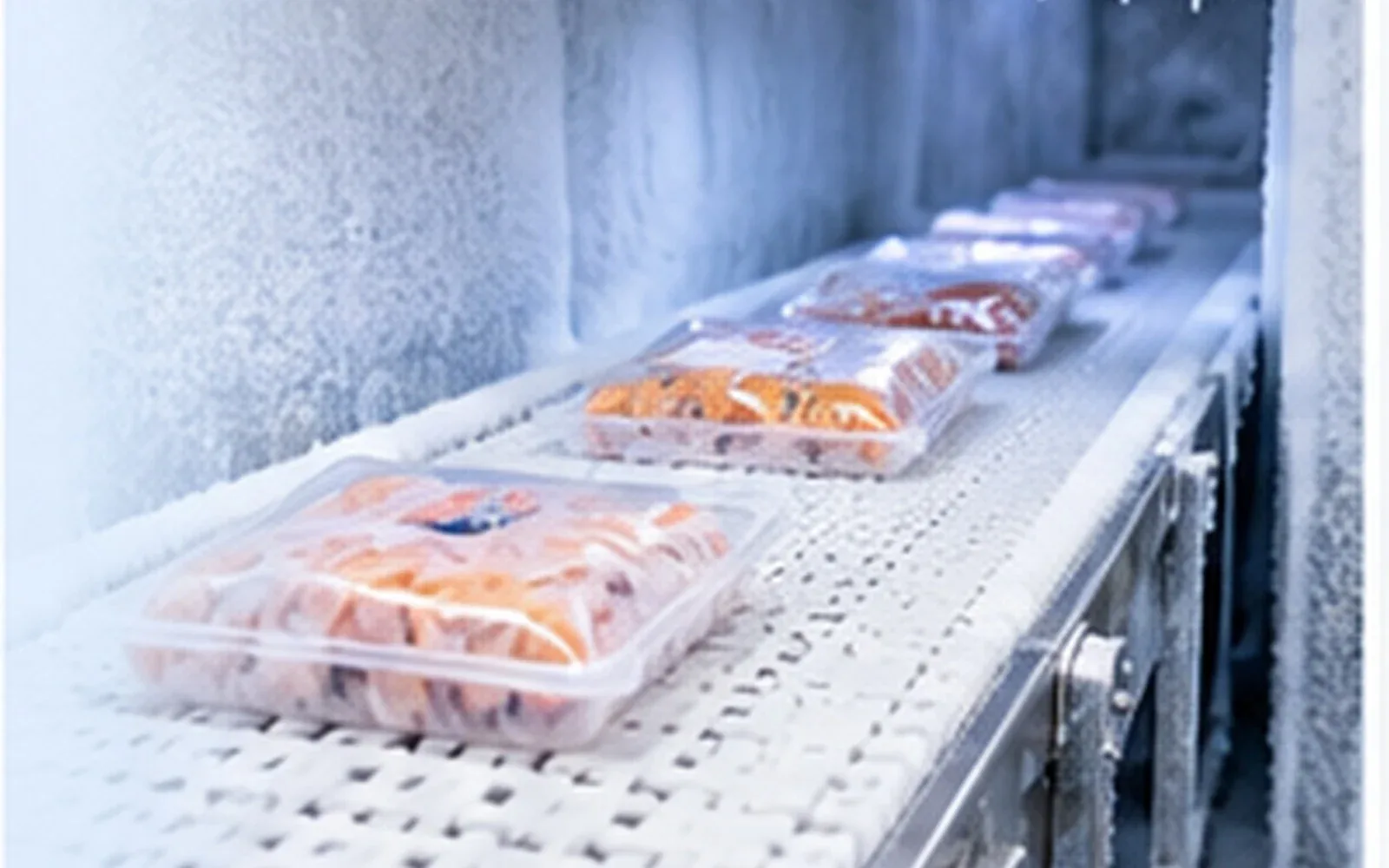
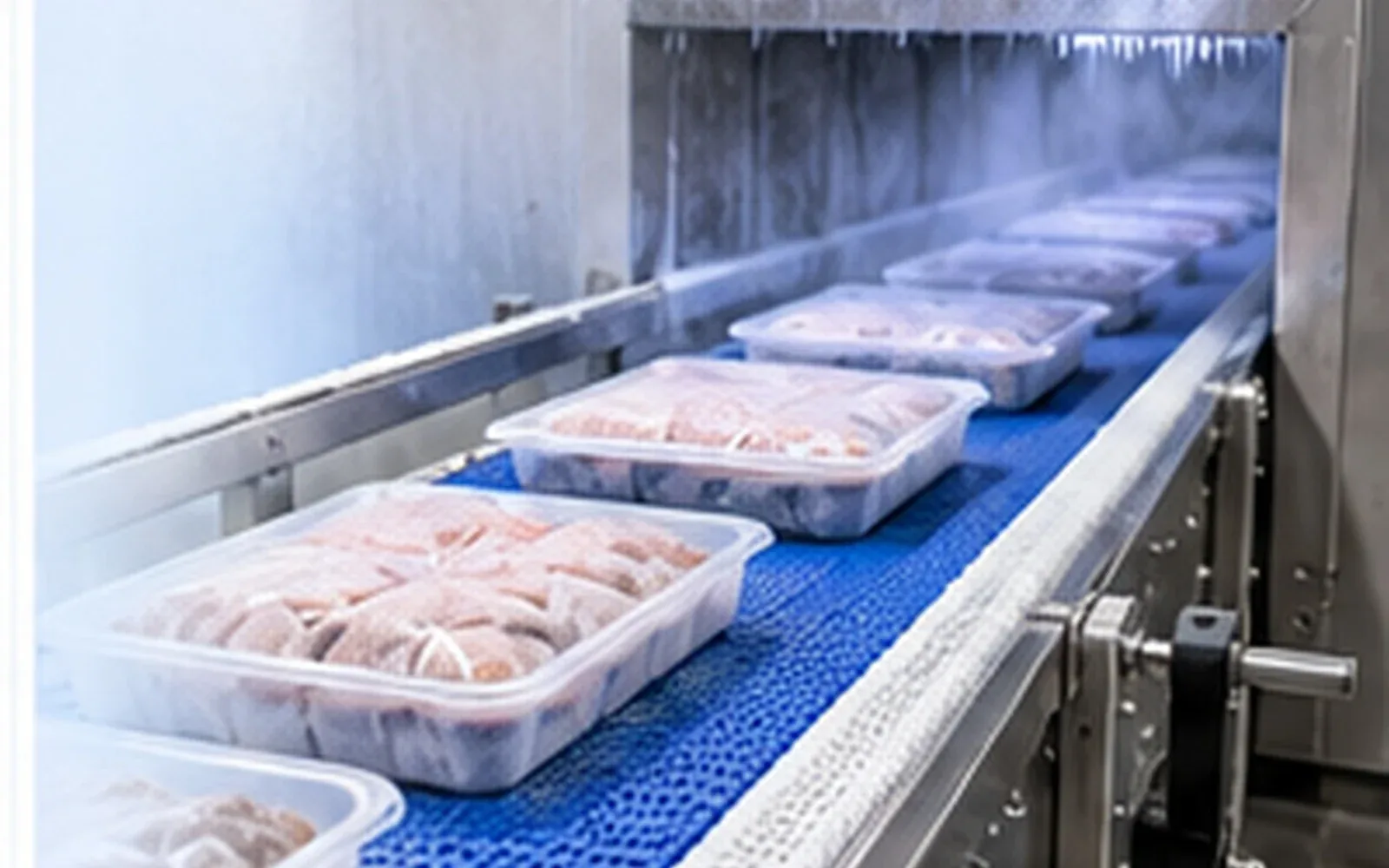
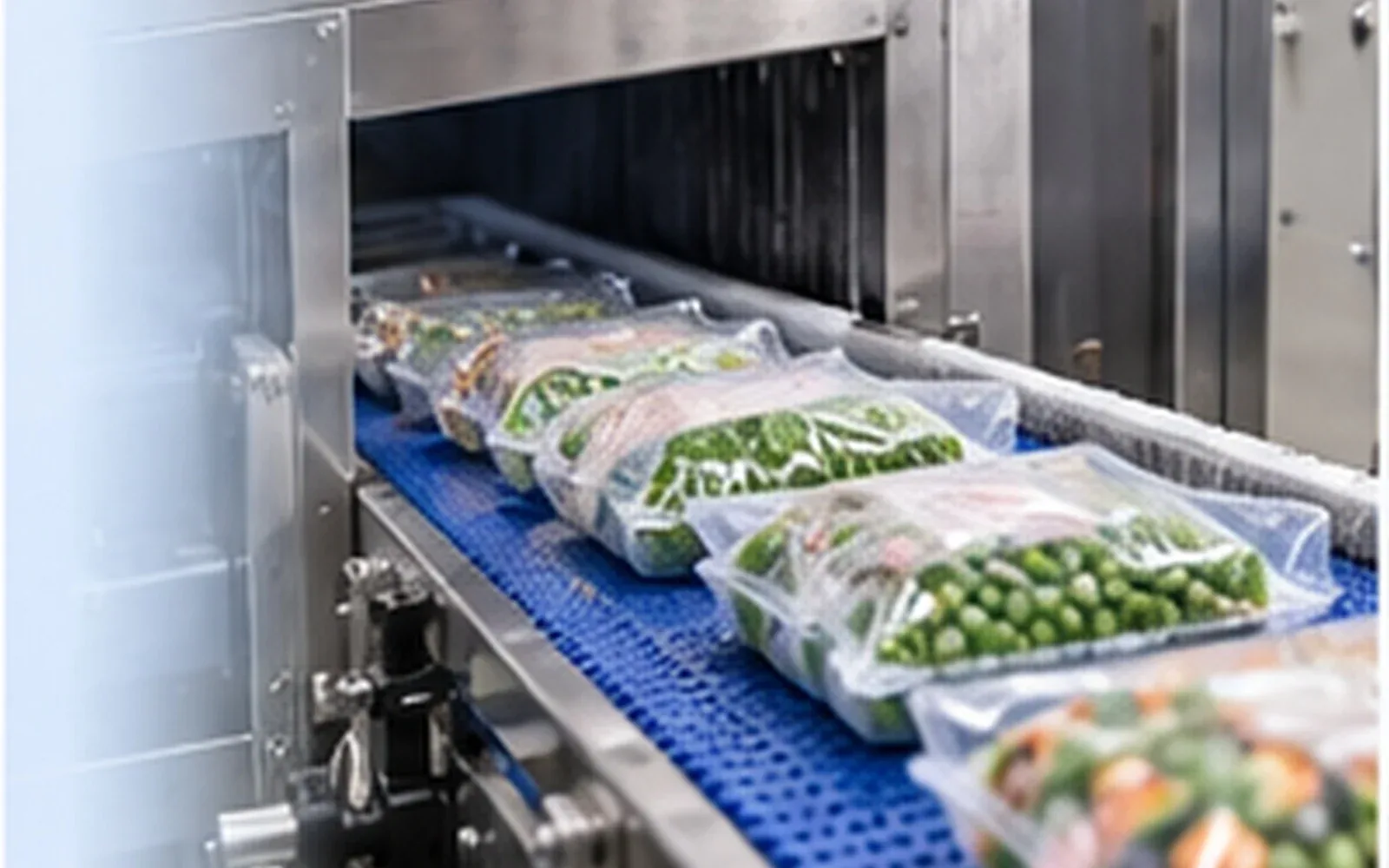
Frozen-food and freezing-tunnel conveyors require temperature, moisture, return-path and cleaning conditions to be treated together. Low-temperature operation should be matched to the stated material and component configuration.
Record dimensions, weight, base shape, stability and whether products touch each other during accumulation.
State temperature, wet or dry conditions, washdown or cleaning chemistry, contamination and required inspection access.
Identify straight runs, curves, inclines, accumulation zones, transfers and the available return path.
Check belt/chain series, sprockets, shaft arrangement, support strips, guides and fixed transfer components as one interface.
Application context
Follow the product through the line
Document product state at infeed and discharge, operating temperature, moisture or frost, dwell time, cleaning routine and any curve or elevation change. Material and articulation limits must be confirmed for the selected series.
Where the process changes, create a separate check point: a wet zone may change material or support needs, a curve introduces lateral guide contact, an accumulation zone changes product pressure, and a short transfer can become the most sensitive interface for small or unstable products.
Product routes by operating need
Use these routes to narrow the family before comparing series-level dimensions.
Broad conveying surfaces for linear sections; select surface and pitch around product support, drainage, transfer and load requirements.
Purpose-designed lateral articulation for curves; verify inside radius, belt width, guide arrangement and transition geometry.
Narrow guided conveying for containers and packaged products; compare straight-running, side-flexing, low-pressure and grip variants as required.
Complete the drive, guide, return and transfer interfaces with components that match the selected belt or chain family.
Selection matrix
| نقطه تصمیم گیری | چه چیزی را تأیید کنیم |
|---|---|
| تماس با محصول | Footprint, stability, bottom surface, allowable pressure or scuffing and whether the product is unpackaged. |
| Conveyor motion | Straight, radius, incline, accumulation, transfer, merge or other motion that changes the belt/chain requirement. |
| محیط عملیاتی | Temperature, moisture, cleaning chemistry, abrasive contamination and exposure duration. |
| Transfer requirement | Product orientation, transfer gap, adjacent conveyor geometry and any comb plate or roller bridge interface. |
| Service access | Ability to inspect hinges/rods, sprockets, guides, return support and cleaning zones without disturbing unrelated equipment. |
Integration and commissioning checks
Inspect shafts, sprockets, guides, wear strips, return components and transfers for wear, contamination or interference.
Jog or run slowly and check engagement, tracking, guide contact, return support and clearances at stationary components.
Use representative product and observe curves, accumulation, transfers and any incline for tipping, scuffing, repeated impact or unstable flow.
Keep the installed series, width, sprocket/shaft data, material option and final guide/transfer configuration for future replacement work.
RFQ preparation
Send the conveyor layout, product details, operating conditions, current belt or chain information when available, sprocket and shaft data, quantity, and photographs of the drive, return and transfer areas. For a replacement, direct dimensions should be supplied with units and the measurement location identified.
Series/model or clear photos; pitch and assembled width; straight or radius layout; product/load; speed; temperature and wet/dry service; sprocket tooth count and bore; quantity; drawing or sketch where available.
سوالات متداول
Can a visually similar belt or chain be used as a replacement?
Only after pitch, width, articulation, underside drive geometry and mating sprockets or guides are checked. Visual similarity alone is not enough.
Should old sprockets be reused?
Reuse should follow a condition and compatibility check. Worn or misaligned sprockets can affect engagement with a new belt or chain.
What if some operating data is unknown?
Mark it as an open confirmation item. A clear unknown is safer than an estimated value that becomes embedded in the purchase specification.
Design worksheet for frozen-food and low-temperature conveying
A useful application review follows the conveyor by zones and records where the duty changes. The same belt or chain family does not have to solve every zone in exactly the same way.
Document temperature, normal orientation, acceptable contact pressure and what happens when products touch during accumulation.
Record moisture or frost, cleaning or contamination, and any process step that changes surface or material requirements.
Map return-path behavior, elevation changes, transfers and the relationship between carryway and return path.
Confirm cleaning and thaw cycles, sprocket/shaft arrangement, guides, fixed transfer parts and maintenance access.
Review the line by zones
| بررسی | بررسی عملی |
|---|---|
| tunnel infeed | Record infeed condition, product orientation, speed and the first support/drive interface. |
| low-temperature run | Check whether the product or environment changes and whether accumulation, guide contact or drainage becomes important. |
| outfeed transition | Observe transitions, curves or transfers where product stability and belt articulation are most sensitive. |
| cleaning and inspection | Record discharge, return and service-access conditions so the next replacement does not require reverse engineering. |
Troubleshooting information that improves selection
If an existing line has a problem, describe the symptom before requesting a different belt. Note where the symptom starts, whether it occurs empty or only with product, and whether it changes with speed, temperature, cleaning or accumulation. A location-specific symptom often points to a guide, drive, support or transfer interface rather than to the entire belt.
Photograph the condition before cleaning or disassembly when safe to do so. Wear patterns, product marks, guide contact and sprocket engagement are easier to interpret before components are moved. Then supply direct measurements at the affected zone.
Useful observations
- Does the symptom occur at one fixed machine location?
- Does it follow the same belt module or chain link?
- Does it change with product loading or accumulation?
- Is wear concentrated at an edge, guide, sprocket or transfer?
- Did the operating condition change before the problem appeared?
Maintenance access and replacement planning
Design or modify the conveyor so the parts most likely to be inspected can be reached without dismantling unrelated equipment. Sprockets, hinge rods, guide surfaces, return supports and transfer components all benefit from visible inspection points. When a line is difficult to access, a small amount of wear can progress unnoticed until the belt or chain is damaged.
For future procurement, retain the installed series, assembled width, sprocket and shaft data, material option, and final guide/transfer arrangement. Add photographs after commissioning. This record reduces the risk that a later emergency replacement is selected only from appearance or an incomplete old part number.
Release criteria before ordering
| Item | Review |
|---|---|
| Product family | The selected family matches straight/radius motion, product contact and the intended accumulation or transfer duty. |
| Dimensions | Critical width, pitch, radius, bore, shaft, guide or mounting dimensions are measured or shown on an approved drawing. |
| اجزای جفتگیری | Sprockets, guides, wear surfaces, return parts and transfer components are either retained after inspection or included in the replacement scope. |
| محیط زیست | Temperature, moisture, cleaning chemistry and contamination are attached to the selected material/configuration. |
| Installation plan | Assembly access, tension/sag or return arrangement, fixed clearances and the first commissioning checks are understood. |
For retrofit work, identify which machine dimensions cannot change. This distinguishes a true drop-in replacement from a technically workable option that would require modifications to shafts, guides or transfers. For new equipment, keep enough flexibility in the frame and support design to accommodate the selected belt or chain without forcing the component to solve a geometry it was not designed for.
Information for operations and maintenance
The selection should be maintainable after the project handoff. Record what operators should watch and what maintenance should measure.
Product flow, unusual noise, guide contact, contamination and visible damage at transfers or curves.
Hinge/rod condition, sprocket engagement, support or return wear and localized edge contact.
Check whether friction, drainage, product release or articulation changes when the environment changes.
Verify empty run, representative product run and the specific zone that previously caused difficulty.
Review your application
Send the layout, existing part details, operating conditions and quantity. We will identify the product family and the remaining interface checks required for quotation.