Produktbeschreibung
High Precision CNC Nylon POM Plastic Machined Wheels
Description
- OEM size suit for customers’ requirment
- Multiple color can be choosed
- Engraved or embossed logo accepted
- Large order quantity are CZPT to be fulfilled
- Strict quality control system
- In time delivery and thoughtful custom-service
- Certification: SGS, GB/T 19001-2016, ISO9001:2005
| Material | Nylon ,mc,nylon,POM,ABS,PU,PP,PE,PTFE,UHMWPE,HDPE,LDPE, PVC,etc. |
| Color | Black, white, red, green, transparent or any color according to Pantone code |
| Größe | As per customer’s requirements |
| Technology | Injection molding, CNC machining, Extrusion. |
| Surface Treatment | Powder coating, Zinc coating, Galvanization, Electro-deposition coating, Chrome/zinc/nickel plating, Polishing, Silkscreen, Black oxide |
| Anwendung | Automotive, ATV, Mechanical equipment, Construction, Home appliance, Aviation, Office facilities, Agriculture, etc. |
| Shippment | We have longterm cooperation with internation shipping agent and express company, so that shipping safty and arriving time are secured |
Our Factory
Our Machine
Our Certification
CZPT is a SGS verified manufacture. We have passed ISO9001:2005 quality control certifacation as well as environment management certification.
For fast quotation, please inform below detials;
1. Product type
2. Size (provide samples or 2d/3d drawings for reference)
3. Material specification (or let us using environment)
4. Quantity request
5. Prefer color
Our Advantage:
OEM service—We are a company specialsing in making OEM mechanical parts in rubber & plastic & pu material, and we produce according to your samples or drawings ,if they are not available, we design according to your requirements and the application. Various existing molds—We have our own CZPT factory,and after more than 30 years of continued accumulation, there is a very large amount of moulds ,so that we may save the CZPT cost for you.
Our Packing
Our usual packaging ways are as followings,or it can be as customer’s request.
Shipping:
We will choose the shipping methods according to your request.
Contact Us
/* 10. März 2571 17:59:20 */!function(){function s(e,r){var a,o={};try{e&&e.split(“,”).forEach(function(e,t){e&&(a=e.match(/(.*?):(.*)$/))&&1
| Angepasst: | Maßgeschneidert |
|---|---|
| Farbe: | Maßgeschneidert |
| Typ: | Rotating Wheel |
| Proben: |
US$ 999/Piece
1 Stück (Mindestbestellmenge) | Order Sample For sample price, package information, and logisti
|
|---|
| Anpassung: |
Verfügbar
| Kundenspezifische Anfrage |
|---|
.shipping-cost-tm .tm-status-off{background: none;padding:0;color: #1470cc}
|
Versandkosten:
Geschätzte Frachtkosten pro Einheit. |
about shipping cost and estimated delivery time. |
|---|
| Payment Method: |
|
|---|---|
|
Initial Payment Full Payment |
| Currency: | US$ |
|---|
| Return&refunds: | You can apply for a refund up to 30 days after receipt of the products. |
|---|
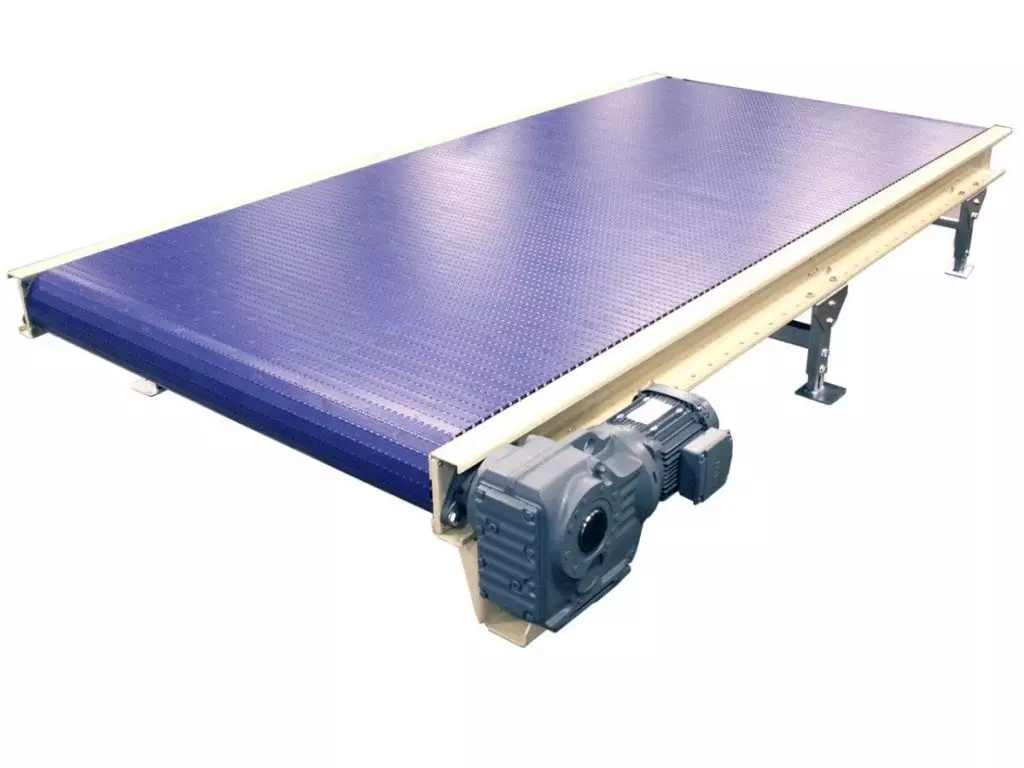
Can plastic belts be used in heavy-duty applications, such as mining or construction?
Yes, plastic belts can indeed be used in heavy-duty applications, including mining and construction. Here’s a detailed explanation:
- Plastic Belt Advancements:
In recent years, there have been significant advancements in plastic belt technology, leading to the development of robust and high-performance plastic belts. These advancements include enhanced material formulations, reinforcement technologies, and improved belt designs, which have expanded the capabilities of plastic belts and made them suitable for heavy-duty applications.
- Strength and Load-Carrying Capacity:
Plastic belts designed for heavy-duty applications are engineered to have excellent strength and load-carrying capacity. Reinforcement technologies, such as embedded fibers, fabric layers, or metal cords, are incorporated into the belt structure to enhance tensile strength and dimensional stability. These reinforcements enable plastic belts to handle heavy loads, endure high tension levels, and resist elongation or stretching during operation. As a result, plastic belts can effectively convey bulk materials, aggregates, or heavy equipment in mining and construction environments.
- Wear and Impact Resistance:
Plastic belts used in heavy-duty applications are designed to exhibit superior wear and impact resistance. They are engineered to withstand the abrasive nature of mining operations or the harsh conditions encountered in construction sites. Advanced material formulations and surface coatings are employed to enhance the belt’s durability, preventing premature wear and tear caused by abrasive materials or impacts from heavy loads. This ensures that plastic belts can maintain their performance and reliability even in demanding operating conditions.
- Chemical and Moisture Resistance:
Plastic belts for heavy-duty applications in mining or construction often have excellent chemical and moisture resistance properties. They are designed to withstand exposure to various chemicals, oils, solvents, or moisture commonly found in these environments. This resistance prevents chemical degradation, swelling, or weakening of the belt material, ensuring its long-term performance and reliability. Additionally, plastic belts with moisture-resistant properties are less prone to damage from water or humidity, making them suitable for outdoor applications or environments with high moisture levels.
- Customization and Modular Designs:
Plastic belts offer customization options and modular designs that make them adaptable to the specific requirements of heavy-duty applications. Manufacturers provide a range of belt widths, lengths, and configurations to accommodate different conveyor systems and operational needs. The modular design of plastic belts allows for easy installation, repair, or replacement, minimizing downtime and ensuring continuous operation in mining or construction sites where efficiency is crucial.
- Benefits of Plastic Belts:
Using plastic belts in heavy-duty applications offers several advantages. Plastic belts are generally lightweight, which reduces the load on conveyor systems, lowers energy consumption, and simplifies installation and maintenance. They also have a lower coefficient of friction compared to other belt materials, resulting in reduced power requirements and improved conveyor efficiency. Additionally, plastic belts are resistant to rust, corrosion, and rot, making them suitable for outdoor or wet environments commonly encountered in mining and construction.
In summary, plastic belts can be successfully used in heavy-duty applications such as mining or construction. With advancements in material formulations, reinforcement technologies, and belt designs, plastic belts now offer the required strength, load-carrying capacity, wear resistance, and chemical resistance to withstand the demanding conditions of these industries. The customization options, modular designs, and additional benefits of plastic belts make them a reliable choice for efficient and durable conveying in heavy-duty applications.
Können Kunststoffbänder an spezifische Branchen oder Förderbandkonfigurationen angepasst werden?
Ja, Kunststoffbänder können individuell an die spezifischen Anforderungen verschiedener Branchen oder Förderbandkonfigurationen angepasst werden. Hier eine detaillierte Erklärung:
- 1. Branchenspezifische Anpassung:
Hersteller von Kunststoffriemen wissen, dass verschiedene Branchen unterschiedliche Bedürfnisse und Betriebsbedingungen haben. Daher bieten sie Anpassungsmöglichkeiten an, um Kunststoffriemen an spezifische Branchenanforderungen anzupassen. Zum Beispiel:
- In der Lebensmittelindustrie können Kunststoffbänder so angepasst werden, dass sie strengen Hygienestandards entsprechen. Dazu gehören beispielsweise glatte Oberflächen für eine einfache Reinigung, die Verwendung von lebensmittelechten Materialien oder die Integration von Merkmalen wie detektierbaren Materialien zur Gewährleistung der Lebensmittelsicherheit.
- In der Automobilindustrie können Kunststoffriemen so angepasst werden, dass sie hohen Temperaturen standhalten, öl- und fettbeständig sind und eine erhöhte Haltbarkeit aufweisen, um schwere Lasten zu bewältigen.
- In der pharmazeutischen Industrie können Kunststoffbänder so angepasst werden, dass sie resistent gegen Chemikalien, Feuchtigkeit und mikrobielles Wachstum sind, wodurch die Einhaltung strenger regulatorischer Anforderungen gewährleistet wird.
- In der Verpackungsindustrie können Kunststoffbänder so angepasst werden, dass sie spezifische Oberflächenstrukturen oder Muster für einen effizienten Produkttransport aufweisen, oder sie können mit speziellen Anbauteilen für eine präzise Produktpositionierung oder -umlenkung ausgestattet werden.
- 2. Anpassung der Förderbandkonfiguration:
Kunststoffbänder lassen sich individuell an die spezifischen Förderanlagenkonfigurationen und Anforderungen einzelner Anwendungen anpassen. Fördersysteme gibt es in verschiedenen Ausführungen, z. B. als Flachbett-, Rollen- oder Modulförderer, und sie können einzigartige Eigenschaften oder Abmessungen aufweisen. Hersteller von Kunststoffbändern bieten Anpassungsoptionen an, um eine nahtlose Integration in das Fördersystem zu gewährleisten, darunter:
- Kundenspezifische Bandbreiten und -längen, die auf die Abmessungen des Fördersystems abgestimmt sind.
- Spezielle Bandkonstruktionen, wie z. B. Flachband-, Gitterband- oder Rippenbandkonfigurationen, basierend auf den Anforderungen des Förderers an Produktstabilität, Haftung oder Entwässerung.
- Kundenspezifische Riemenzubehörteile wie Kettenräder, Riemenscheiben oder Stollen, die so konstruiert sind, dass sie nahtlos mit dem Fördersystem zusammenarbeiten und die gewünschte Funktionalität bieten.
- Modulare Kunststoffbänder, die sich leicht montieren oder umkonfigurieren lassen, um verschiedenen Förderbandlayouts gerecht zu werden oder spezifische Produkthandhabungsanforderungen zu erfüllen.
Durch branchenspezifische Anpassung und individuelle Konfiguration der Förderbänder lassen sich Kunststoffbänder optimal auf die spezifischen Herausforderungen und Anforderungen verschiedener Branchen und Fördersysteme zuschneiden. Diese hohe Anpassungsfähigkeit gewährleistet optimale Leistung, Effizienz und Zuverlässigkeit im Materialfluss.
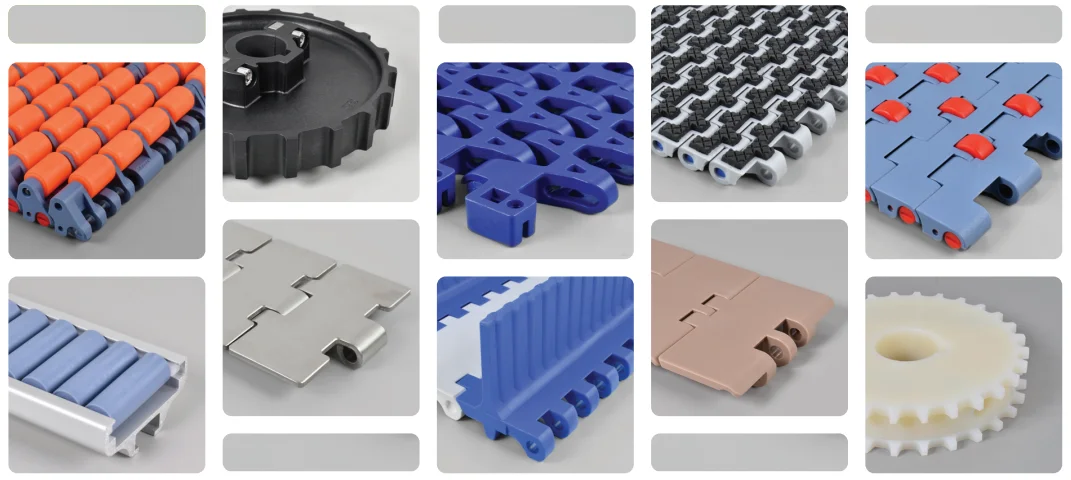
Can you explain the advantages of using plastic belts over traditional materials in conveyor systems?
Using plastic belts in conveyor systems offers several advantages over traditional materials such as rubber or fabric. Plastic belts, also known as polymer belts or synthetic belts, are made from various types of plastic materials and provide unique characteristics that make them desirable for conveyor applications. Here’s a detailed explanation of the advantages of using plastic belts over traditional materials in conveyor systems:
- Durability and Longevity:
- Versatility and Customization:
- Hygienic and Easy to Clean:
- Low Friction and Energy Efficiency:
- Chemical Resistance:
- Lightweight and Easy Installation:
Plastic belts are known for their durability and longevity. They are resistant to wear, abrasion, and impact, allowing them to withstand harsh operating conditions. Unlike rubber or fabric belts, plastic belts do not easily degrade or stretch over time. They can handle heavy loads and maintain their shape and performance for extended periods, resulting in reduced maintenance and replacement costs for conveyor systems.
Plastic belts offer versatility and customization options for conveyor systems. They can be manufactured in various sizes, widths, and configurations to meet specific application requirements. Plastic belts can have different surface patterns, such as smooth, textured, or perforated, providing enhanced grip, airflow, or product release capabilities. Additionally, plastic belts can be designed with specialized features like high temperature resistance, chemical resistance, or anti-static properties, making them suitable for diverse industries and conveyor applications.
Plastic belts are highly hygienic and easy to clean, making them ideal for industries with strict cleanliness and sanitation standards. Unlike fabric belts, plastic belts do not absorb liquids or harbor bacteria, reducing the risk of contamination in food processing, pharmaceutical, or other clean environments. Plastic belts can be easily cleaned using water, steam, or cleaning agents, ensuring optimal hygiene and compliance with industry regulations.
Plastic belts offer low friction characteristics, resulting in energy-efficient conveyor systems. The reduced friction between the belt and the conveyor components minimizes power consumption, allowing for cost savings and environmental benefits. Additionally, the low friction properties of plastic belts contribute to smoother and quieter operation, reducing noise levels in the workplace.
Plastic belts exhibit excellent chemical resistance, making them suitable for conveyor systems that handle corrosive or aggressive substances. They can withstand exposure to various chemicals, oils, solvents, and cleaning agents without deteriorating or experiencing significant damage. Plastic belts’ chemical resistance ensures their longevity and reliability in industries such as chemical processing, pharmaceuticals, or wastewater treatment.
Plastic belts are lightweight compared to traditional materials, facilitating easy installation and maintenance of conveyor systems. The reduced weight of plastic belts reduces the strain on conveyor components, extending their lifespan. Additionally, the lightweight nature of plastic belts simplifies handling during installation or replacement, improving efficiency and reducing downtime.
In summary, using plastic belts in conveyor systems offers significant advantages over traditional materials. They provide durability, versatility, and customization options, ensuring long-lasting and efficient performance. Plastic belts are hygienic, easy to clean, and resistant to chemicals, making them suitable for industries with strict cleanliness requirements. They offer low friction and energy efficiency, contributing to cost savings and environmental benefits. Moreover, plastic belts are lightweight and easy to install, simplifying maintenance and reducing downtime. These advantages make plastic belts a preferred choice in various industries for their conveyor system needs.


editor by CX 2024-02-10