Produktbeschreibung
1. Mehr als 10 Jahre Erfahrung in der Herstellung von Verpackungsmaschinen
2. Seit 10 Jahren Alibaba-Lieferant
3. 100%-Qualitätskontrolle vor dem Versand
4. 12 Monate Garantie
5. Produkt CE-zertifiziert
Einführung:
Die automatische Etikettiermaschine ARLM-160A erfüllt die Anforderungen an die Etikettierung von Halbkreisen und Flaschen und ermöglicht ein einfaches und bequemes Umschalten.
Breites Anwendungsspektrum: Selbstklebeetiketten, Klebefolien, elektronische Überwachungscodes, Barcodes usw.
Anwendungsbranchen: Weit verbreitet in der Lebensmittel-, Medizin-, Kosmetik-, Haushaltschemikalien-, Elektronik-, Eisenwaren-, Kunststoff- und anderen Branchen.
Anwendungsbeispiel: Etikettierung von PET-Rundflaschen, Plastikflaschen, Konservendosen usw.
Merkmale:
1. Etikettierungsqualität: Durch die Verwendung eines Standard-Federbandes wird eine glatte Etikettierung ohne Falten erzielt, was die Verpackungsqualität verbessert.
2. Flexible Anwendung, Flaschenständer-Etikettierung vertikal, mit automatischer Unterflaschenfunktion, kann als Standalone-Produktion eingesetzt oder an eine Produktionslinie angeschlossen werden.
3. Intelligente Steuerung, automatische fotoelektrische Nachführung, auch ohne Etikettierung, automatische Kalibrierung und automatische Etikettenerkennung, um Leckagen und Etikettenverschwendung zu vermeiden.
4. Einfache Einstellung: Etikettiergeschwindigkeit, Fördergeschwindigkeit und Flaschengeschwindigkeit lassen sich stufenlos nach Bedarf regeln.
5. Langlebig dank 3-Stangen-Verstellmechanismus und optimaler Dreiecksstabilität – eine robuste und langlebige Maschine. Gefertigt aus Edelstahl und einer hochwertigen Aluminiumlegierung, entspricht sie den CE-Produktionsanforderungen.
Benutzerdefinierte Funktionen:
1. Kann Codierung und Drucken hinzufügen
2. Das Förderband kann durch eine Kettenplatte ersetzt werden.
3. Breite, Länge und Höhe können individuell angepasst werden.
4. Die benutzerdefinierte Funktion ist für alle automatischen Etikettiermaschinen anwendbar.
5. Die Maschine kann nur zum Aufkleben von Etiketten verwendet werden. Sie kann auch zum Aufkleben transparenter Etiketten angepasst werden; dazu muss die optische Faser durch eine transparente optische Faser ersetzt werden. (Konventionelle Etiketten werden durch Induktion gefärbt; transparente Etiketten durch Induktionsdicke gefärbt.)
Notiz:
Diese Maschine ist eine Standardmaschine und kann nur mit normalen runden Flaschen verwendet werden, die nicht zu weich oder ausgebeult sind.
Kann individuell gestaltet werden, wenn die Flasche Rillen aufweist.
Parameter:
| Modell | ARLM-160A |
| Leistung | 550 W |
| Füllgeschwindigkeit | 10–50 Stück/min |
| Abfüllgenauigkeit | ±1% |
| Flaschendurchmesser | 30-150 mm |
| Flasche hoch | 10-500 mm |
| Etikettengewicht | 20-150 mm |
| Etikettenhöhe | 30-160 mm |
F: Sind Sie ein Hersteller oder ein Handelsunternehmen?
A: Wir sind ein Hersteller von Verpackungsmaschinen und bieten einen perfekten OEM- und Kundendienst.
F: Können Sie mir ein Video schicken, das die Funktionsweise der Maschine zeigt?
A: Selbstverständlich haben wir von jeder Maschine ein Video gemacht und es auf YouTube hochgeladen.
F: Woran kann ich erkennen, dass Ihre Maschine einwandfrei funktioniert?
A: Vor der Auslieferung werden wir die Funktionsfähigkeit der Maschine für Sie testen.
F: Woran kann ich erkennen, dass Ihre Maschine für mein Produkt geeignet ist?
A: Sie können uns Muster Ihres Produkts zusenden, die wir dann maschinell testen.
F: Wie kann ich meine Bestellung bezahlen?
A: Wir akzeptieren die Zahlungsarten T/T und L/C. Bei Bestellungen unter 500 USD akzeptieren wir die Zahlung per Trade Assurance.
F: Besitzen Sie ein CE-Zertifikat?
A: Jedes Maschinenmodell verfügt über ein CE-Zertifikat.
Ihre Zufriedenheit ist unsere Ehre
| Automatische Bewertung: | Automatisch |
|---|---|
| Anwendbare Branche: | Lebensmittel, Kosmetik, Landwirtschaft, Medizin, tägliche Chemie |
| Anwendung: | Kosmetik, Getränke, Reinigungsmittel, Waschmittel, Hautpflegeprodukte, Haarpflegeprodukte, Öl, Tee, Fisch, Fleisch, Snacks, Gewürze, Milchprodukte |
| Typ: | Automatische Etikettiermaschine |
| Antriebstyp: | Elektrisch |
| Einstufung: | Automatische vertikale Etikettiermaschine für runde Flaschen |
| Anpassung: |
Verfügbar
| Kundenspezifische Anfrage |
|---|
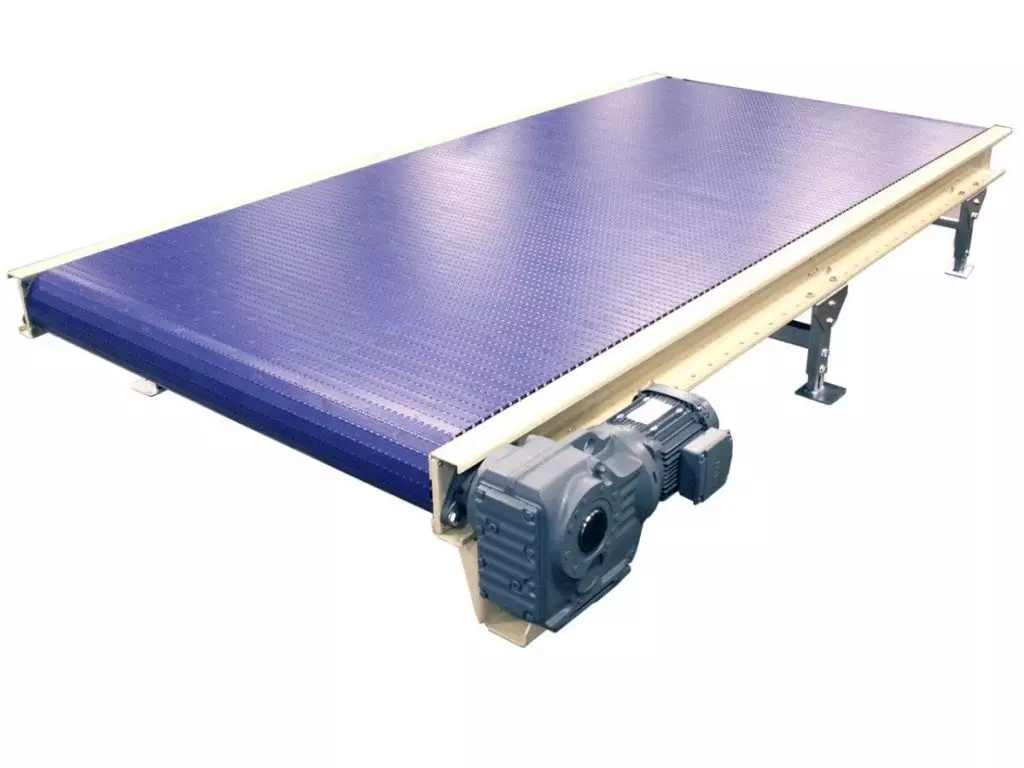
Can plastic belts be used in heavy-duty applications, such as mining or construction?
Yes, plastic belts can indeed be used in heavy-duty applications, including mining and construction. Here’s a detailed explanation:
- Plastic Belt Advancements:
In recent years, there have been significant advancements in plastic belt technology, leading to the development of robust and high-performance plastic belts. These advancements include enhanced material formulations, reinforcement technologies, and improved belt designs, which have expanded the capabilities of plastic belts and made them suitable for heavy-duty applications.
- Strength and Load-Carrying Capacity:
Plastic belts designed for heavy-duty applications are engineered to have excellent strength and load-carrying capacity. Reinforcement technologies, such as embedded fibers, fabric layers, or metal cords, are incorporated into the belt structure to enhance tensile strength and dimensional stability. These reinforcements enable plastic belts to handle heavy loads, endure high tension levels, and resist elongation or stretching during operation. As a result, plastic belts can effectively convey bulk materials, aggregates, or heavy equipment in mining and construction environments.
- Wear and Impact Resistance:
Plastic belts used in heavy-duty applications are designed to exhibit superior wear and impact resistance. They are engineered to withstand the abrasive nature of mining operations or the harsh conditions encountered in construction sites. Advanced material formulations and surface coatings are employed to enhance the belt’s durability, preventing premature wear and tear caused by abrasive materials or impacts from heavy loads. This ensures that plastic belts can maintain their performance and reliability even in demanding operating conditions.
- Chemical and Moisture Resistance:
Plastic belts for heavy-duty applications in mining or construction often have excellent chemical and moisture resistance properties. They are designed to withstand exposure to various chemicals, oils, solvents, or moisture commonly found in these environments. This resistance prevents chemical degradation, swelling, or weakening of the belt material, ensuring its long-term performance and reliability. Additionally, plastic belts with moisture-resistant properties are less prone to damage from water or humidity, making them suitable for outdoor applications or environments with high moisture levels.
- Customization and Modular Designs:
Plastic belts offer customization options and modular designs that make them adaptable to the specific requirements of heavy-duty applications. Manufacturers provide a range of belt widths, lengths, and configurations to accommodate different conveyor systems and operational needs. The modular design of plastic belts allows for easy installation, repair, or replacement, minimizing downtime and ensuring continuous operation in mining or construction sites where efficiency is crucial.
- Benefits of Plastic Belts:
Using plastic belts in heavy-duty applications offers several advantages. Plastic belts are generally lightweight, which reduces the load on conveyor systems, lowers energy consumption, and simplifies installation and maintenance. They also have a lower coefficient of friction compared to other belt materials, resulting in reduced power requirements and improved conveyor efficiency. Additionally, plastic belts are resistant to rust, corrosion, and rot, making them suitable for outdoor or wet environments commonly encountered in mining and construction.
In summary, plastic belts can be successfully used in heavy-duty applications such as mining or construction. With advancements in material formulations, reinforcement technologies, and belt designs, plastic belts now offer the required strength, load-carrying capacity, wear resistance, and chemical resistance to withstand the demanding conditions of these industries. The customization options, modular designs, and additional benefits of plastic belts make them a reliable choice for efficient and durable conveying in heavy-duty applications.
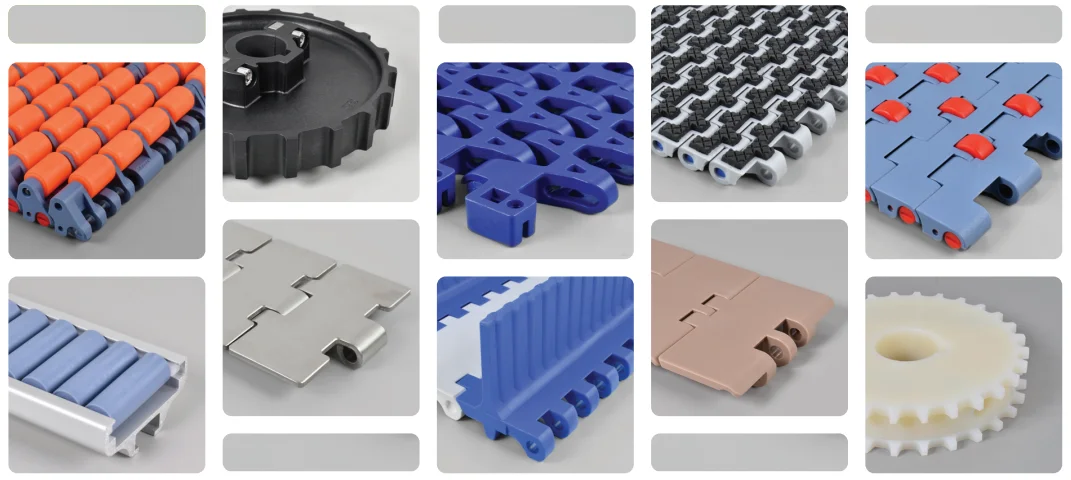
What factors should be considered when selecting plastic belts for different industrial applications?
When selecting plastic belts for different industrial applications, several factors should be taken into consideration. Here are the key factors to consider:
- 1. Application Requirements:
Understand the specific requirements of the application. Consider factors such as the type of products being conveyed, the weight and size of the loads, the desired conveying speed, the operating temperature range, the presence of moisture or chemicals, and any special handling needs. Clear knowledge of the application requirements will help in selecting a plastic belt with the appropriate characteristics and capabilities.
- 2. Belt Configuration and Design:
Consider the belt configuration and design that best suits the application. Different plastic belts come in various configurations, including flat-top, flush-grid, raised-rib, and modular designs. Evaluate the belt’s surface texture, open area percentage, and any specialized features such as cleats, perforations, or vacuum capabilities. The belt design should align with the product characteristics, conveying conditions, and any specific requirements like incline/decline conveying or product diverting.
- 3. Material Selection:
Choose the appropriate plastic material for the belt based on the application’s demands. Common plastic materials used for belts include polyethylene (PE), polypropylene (PP), acetal (POM), polyvinyl chloride (PVC), and polyurethane (PU). Consider factors such as chemical resistance, temperature resistance, wear resistance, flexibility, and food-grade compliance. Ensure the selected material can withstand the operating conditions and environmental factors that the belt will encounter.
- 4. Load Capacity and Durability:
Evaluate the load capacity requirements of the application and select a plastic belt that can handle the intended loads. Consider the weight capacity per unit width and the overall strength and durability of the belt. Factors such as the belt’s tensile strength, impact resistance, and resistance to abrasion or wear are important for ensuring the longevity and reliability of the belt in demanding industrial environments.
- 5. Cleanability and Hygiene:
In industries with stringent hygiene requirements, such as food processing or pharmaceuticals, prioritize plastic belts that are easy to clean and sanitize. Look for belts with smooth, non-porous surfaces that resist bacterial growth and are compatible with regular washdown procedures. Consider whether the belt can withstand cleaning agents and temperature variations without degradation or compromising its hygienic properties.
- 6. Compatibility with Conveyor System:
Ensure the selected plastic belt is compatible with the existing or planned conveyor system. Consider factors such as the belt’s width and length options, the type of conveyor system (e.g., flatbed, roller, or modular), the compatibility of the belt’s sprockets or pulleys with the conveyor system, and the ease of installation and maintenance. Proper compatibility will ensure smooth integration and optimal performance of the belt within the conveyor system.
- 7. Cost and Long-Term Value:
Evaluate the cost-effectiveness and long-term value of the plastic belt. Consider not only the upfront cost of the belt but also its expected lifespan, maintenance requirements, and potential savings in terms of reduced downtime, increased productivity, and lower operational costs. Balancing cost considerations with the desired performance and durability will help in selecting a plastic belt that delivers the best value for the specific industrial application.
By considering these factors in the selection process, industries can choose the most suitable plastic belt that meets the unique requirements of their industrial applications, ensuring efficient and reliable material handling operations.
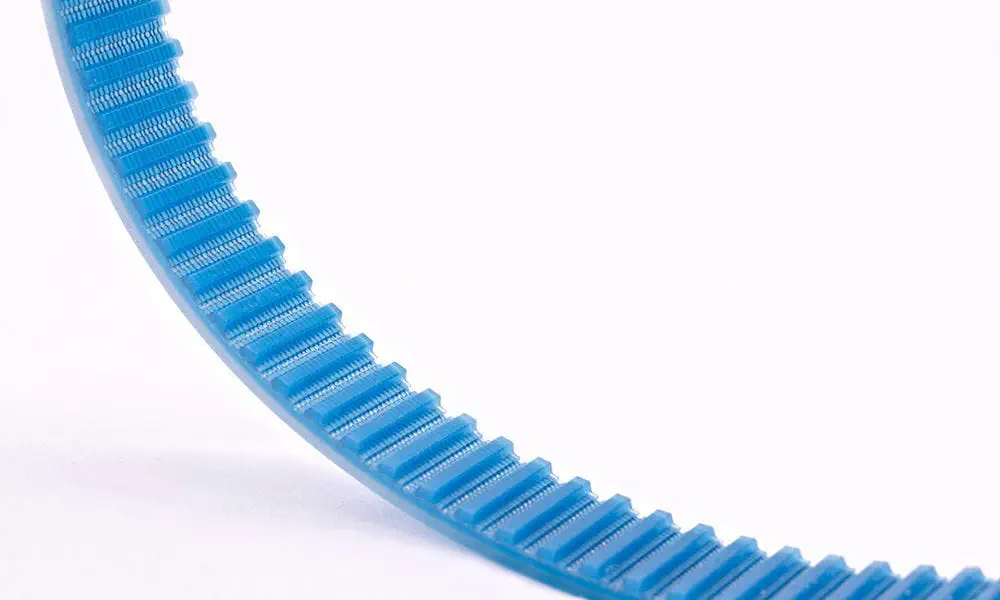
Gibt es spezielle Anwendungsbereiche, in denen Kunststoffbänder anderen Förderbandarten überlegen sind?
Ja, es gibt spezielle Anwendungsbereiche, in denen Kunststoffbänder anderen Förderbandarten überlegen sind. Hier eine detaillierte Erklärung:
- 1. Hygienische Umgebungen:
Kunststoffbänder eignen sich besonders gut für Anwendungen in hygienischen Umgebungen wie der Lebensmittel- und Getränkeindustrie, der Pharmaindustrie und dem Gesundheitswesen. Sie bieten glatte, porenfreie Oberflächen, die leicht zu reinigen und zu desinfizieren sind und so das Risiko von Bakterienwachstum und Kreuzkontamination reduzieren. Dank ihrer Beständigkeit gegenüber Chemikalien und Feuchtigkeit sind Kunststoffbänder ideal für Branchen, die regelmäßige Reinigungen und die Einhaltung strenger Hygienestandards erfordern. In diesen Anwendungsbereichen sind Kunststoffbänder anderen Bandtypen wie Gewebe- oder Metallbändern überlegen, die schwieriger zu reinigen sein oder anfälliger für Bakterienansammlungen sein können.
- 2. Produktakkumulation und -umleitung:
Kunststoffbänder, insbesondere modulare Kunststoffbänder, eignen sich hervorragend für Anwendungen, die eine Produktansammlung und -umleitung erfordern. Die ineinandergreifenden Module ermöglichen einen reibungslosen Produktfluss und eine effiziente Ansammlung ohne zusätzliche Komponenten oder komplexe Steuerungssysteme. Mit einfachen Mechanismen können Produkte auf verschiedene Spuren oder Förderbänder umgeleitet werden. Dank ihrer Flexibilität und Anpassungsfähigkeit sind Kunststoffbänder die ideale Wahl für Anwendungen, die eine präzise Produktsteuerung und -umleitung erfordern, wie beispielsweise Sortieranlagen in Distributionszentren oder Montagelinien mit mehreren Arbeitsstationen.
- 3. Schonende Produktbehandlung:
Kunststoffbänder, insbesondere solche mit Stollen oder Vakuumfunktion, sind die erste Wahl, wenn eine schonende Produkthandhabung erforderlich ist. Die Stollen verhindern das Verrutschen des Produkts und gewährleisten einen stabilen Transport. Dadurch eignen sie sich für Steigungen und Gefälle sowie für den Transport empfindlicher Güter. Vakuum-Kunststoffbänder nutzen Saugkraft, um leichte oder zerbrechliche Produkte während des Transports sicher zu halten und so Produktschäden zu minimieren. Diese Bänder sind anderen Bandtypen wie Rollen- oder Kettenförderern überlegen, da diese Reibung, Stöße oder Abrieb an den transportierten Produkten verursachen können.
- 4. Geräuschreduzierung:
Kunststoffbänder bieten gegenüber anderen Förderbandarten Vorteile bei der Geräuschreduzierung. Die dämpfenden Eigenschaften von Kunststoffen tragen dazu bei, Vibrationen zu absorbieren und den Betriebslärm zu verringern. Daher sind Kunststoffbänder die bevorzugte Wahl für Anwendungen, bei denen ein geringer Geräuschpegel erforderlich ist, wie beispielsweise im Einzelhandel, in Büros oder in Produktionsstätten mit strengen Lärmschutzbestimmungen. Andere Bandarten, wie Metall- oder Gewebebänder, können aufgrund ihrer Materialeigenschaften oder ihrer Konstruktion einen höheren Geräuschpegel erzeugen.
- 5. Korrosive oder feuchte Umgebungen:
Kunststoffbänder sind äußerst beständig gegen Chemikalien, Öle und Feuchtigkeit und eignen sich daher ideal für Anwendungen in korrosiven oder feuchten Umgebungen. In Branchen wie der chemischen Industrie, der Abwasserbehandlung oder dem Bergbau, wo der Kontakt mit korrosiven Substanzen oder Wasser häufig vorkommt, bieten Kunststoffbänder im Vergleich zu Bändern aus Materialien wie Metall oder Gewebe eine überlegene Leistung und Langlebigkeit. Die Beständigkeit von Kunststoffbändern gegen Korrosion und Feuchtigkeitsschäden gewährleistet einen zuverlässigen Betrieb und verlängert die Lebensdauer des Fördersystems.
Zusammenfassend lässt sich sagen, dass Kunststoffbänder anderen Förderbandarten in bestimmten Anwendungsbereichen überlegen sind, in denen Hygiene, Produktansammlung und -umleitung, schonende Materialhandhabung, Geräuschreduzierung und Beständigkeit gegenüber korrosiven oder feuchten Umgebungen entscheidend sind. Das Verständnis der besonderen Vorteile von Kunststoffbändern in diesen Anwendungsbereichen hilft Unternehmen, fundierte Entscheidungen bei der Auswahl des am besten geeigneten Förderbandes für ihre Materialtransportanforderungen zu treffen.


editor by CX 2023-11-27